
Recognizing the Hidden Signs of a Stroke: Why Every Second Counts
Posted By Dr. Akhilesh Kumar | Stroke Treatment in Lucknow
Most people have heard the basic warning signs of a stroke. However, knowing the signs and acting on them are two very different things. A stroke does not always look the way people expect. You might not see a dramatic collapse or hear slurred speech.
Sometimes, a stroke looks like simple tiredness, a bad headache, or a brief moment of confusion. In those critical first few minutes, the outcome of a patient’s life is already being decided. Understanding the nuances of this medical emergency can be the difference between full recovery and permanent disability.
What Happens During a Stroke?
When a stroke occurs, blood stops reaching a specific part of the brain. Because blood carries vital oxygen, the brain begins to suffer immediately. Without oxygen, brain cells start dying within minutes.
Unfortunately, the brain cannot repair itself in the way skin or bone can. Once brain cells die, they do not come back. Whatever function those cells controlled—whether it is speech, movement, or memory—may be lost forever.
This is why medical professionals emphasize that “Time is Brain.” Around the immediate area of damage, there is often a “penumbra”—a zone of living tissue that is struggling but not yet dead. This tissue can be saved, but only if treatment arrives in time. Every minute of delay allows the damage to expand.
Beyond the Basics: The BE FAST Method
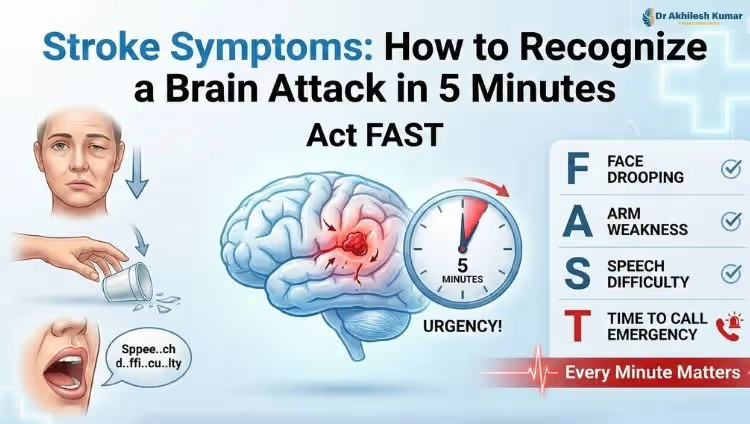
Most public health campaigns teach the BE FAST acronym. These signs are essential and reliable:
-
B — Balance: Sudden loss of balance or coordination.
-
E — Eyes: Sudden blurring or loss of vision in one or both eyes.
-
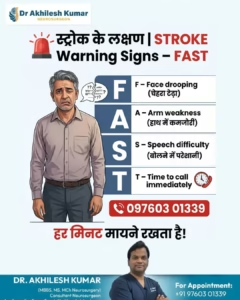
F — Face: One side of the face droops or feels numb.
-
A — Arm: Weakness or numbness in one arm, specifically on one side of the body.
-
S — Speech: Speech that sounds slurred, garbled, or strange.
-
T — Time: Time to call emergency services immediately.
While these signs are vital, they do not cover every type of stroke. Many “atypical” strokes look different, and this is where people lose precious time.
The Stroke Signs That People Miss Most Often
Because some symptoms are subtle, families often rationalize them away. If you notice any of the following, do not wait for them to disappear.
1. Sudden Confusion
In this scenario, the person seems physically fine. They are walking and moving normally. However, their words do not make sense, or they cannot follow a simple conversation. Families often assume the person is just stressed or exhausted. In reality, this “aphasia” or confusion is a common sign of a stroke affecting the language centers of the brain.
2. Sudden Vision Problems
A person might experience a “dark curtain” dropping over one eye, or a portion of their visual field might simply vanish. Naturally, people think of calling an eye doctor. However, sudden vision loss is a neurological emergency. It requires a hospital, not an optometry appointment.
3. The “Worst Headache of Their Life”
Medical professionals take this description very seriously. If a headache comes on like a thunderclap and feels unlike any previous pain, it could indicate a hemorrhagic stroke (bleeding in the brain). Taking a painkiller and lying down is the most dangerous response possible.
4. Symptoms That Come and Go (TIA)
If a person has stroke symptoms for ten minutes and then feels completely normal, they have likely experienced a TIA (Transient Ischemic Attack). Many people call this a “mini-stroke.” While the symptoms have passed, the danger has not. A TIA is a massive warning sign; the risk of a major stroke occurring within the next 48 hours is extremely high.
Important Facts Most People Do Not Know
Stroke education often misses the complexities of how the brain functions. Here are three critical facts to remember:
-
Strokes Can Cause Dizziness Without Weakness: Strokes in the back of the brain (the cerebellum or brainstem) cause vertigo, vomiting, and double vision. You might not see a drooping face or a weak arm, leading people to mistake the stroke for a simple dizzy spell.
-
Age Is Not a Shield: Stroke is not exclusive to the elderly. Adults in their 20s, 30s, and 40s can and do have strokes. Risk factors for young people include smoking, hormonal birth control, heart defects, and blood clotting disorders.
-
Only a Scan Can Confirm the Cause: You cannot tell the difference between a stroke, a brain tumor, or a seizure based on symptoms alone. A brain tumor that bleeds can mimic a stroke perfectly. Only a CT or MRI scan can provide the answer.
The Treatment Window: New Hope for Recovery
There is a common myth that nothing can be done after 4.5 hours. While earlier is always better, medical technology has extended the window of hope.
-
Clot-Busting Medication: These drugs (thrombolytics) are generally effective if administered within 4.5 hours of the start of symptoms.
-
Thrombectomy: In certain cases, doctors use a catheter to physically remove a clot. This advanced procedure can sometimes be performed up to 24 hours after the stroke, depending on what the brain scan reveals.
The availability of these options depends entirely on how much brain tissue is still salvageable. Therefore, the sooner you reach the hospital, the more “tools” the doctors have to save your brain.
Why Waiting at Home is Dangerous
The most common mistake families make is “waiting to see.” They might monitor the person’s blood pressure or encourage them to sleep it off. This is understandable but frequently fatal to brain function.
No one can diagnose a brain event at home. Without a professional scan, you are essentially guessing with a loved one’s life. Guessing wastes time, and wasting time kills brain cells.
What You Should Do Immediately
If you suspect a stroke, follow these steps without deviation:
-
Do Not Wait: Even if the symptoms seem mild, act immediately.
-
Do Not Give Medication: Do not give aspirin or blood pressure pills, as these can make certain types of strokes (bleeds) much worse.
-
Note the Time: Identify the “Last Known Well” time. This is the last moment the person was acting normally. Doctors need this information to decide which treatments are safe to use.
-
Seek Specialist Care: For those in Lucknow, Dr. Akhilesh Kumar provides expert evaluation and specialized stroke treatment.
Frequently Asked Questions
Can a stroke happen while someone is sleeping?
Yes. This is called a “Wake-up Stroke.” Because the start time is unknown, these patients require advanced imaging to see if treatment is still viable.
Does a TIA require an emergency room visit?
Absolutely. A TIA is a medical emergency. It is your best chance to prevent a permanent, debilitating stroke from happening a few hours later.
Why is specialist care important?
Not every hospital is equipped for advanced stroke care. Specialist neurologists like Dr. Akhilesh Kumar can interpret complex scans and perform interventions that standard clinics cannot.
Final Thought
A stroke is not always loud. It is not always obvious. Sometimes it is a quiet confusion or a sudden blur in your vision. But it is always urgent.
The first five minutes are about recognition. The next hour is about action. The decisions you make in those moments will determine the quality of life for years to come.
Act fast. Every second is brain.
