
Migraine Symptoms vs Normal Headache: What’s Really Different?
By Dr. Akhilesh Kumar — Migraine Treatment in Lucknow
If you have ever said, “I think I have a migraine,” and someone replied, “It’s probably just a headache,” you are not alone. Most people use these two words as if they mean the same thing. They don’t. And that confusion can delay the right treatment for months or even years.
As a neurosurgeon in Lucknow, Dr. Akhilesh Kumar sees patients every week who have been living with undiagnosed or mismanaged migraine symptoms for far too long. This blog will help you understand the real difference in plain and simple language.
What Is a Normal Headache?
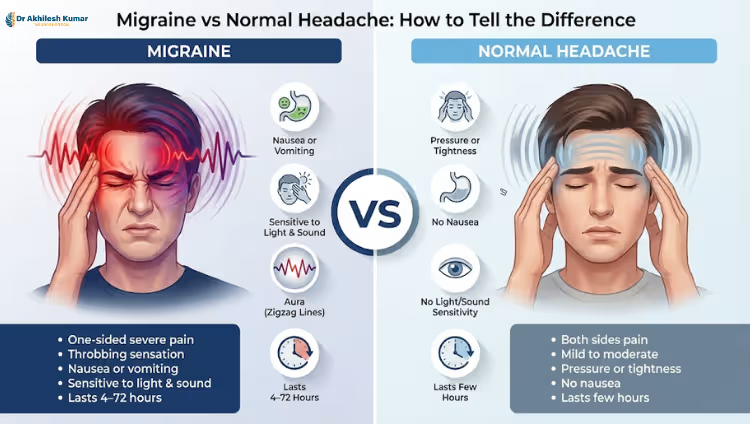
A regular headache is actually a symptom, not a disease. It usually happens because of muscle tension, dehydration, stress, sitting in a bad posture, or a sinus problem. The pain is often felt on both sides of the head. It feels like pressure or tightness. It usually goes away with rest or a simple painkiller. Most people recover within a few hours.
What Are Migraine Symptoms?
Migraine is not just a “very bad headache.” It is a brain condition. The brain itself becomes overactive and sends wrong signals through the nervous system. This causes a chain reaction that leads to pain, nausea, and extreme sensitivity to light and sound.
Common migraine symptoms include throbbing pain usually on one side of the head, feeling sick or vomiting, not being able to tolerate bright lights or loud sounds, pain that gets worse when you move or climb stairs, and a feeling of being completely drained after the attack ends.
Some people also get something called an “aura” before the headache starts. This includes seeing zigzag lines or flashing lights, feeling numbness or tingling in the face or hands, or having difficulty speaking clearly. If you experience these, do not ignore them.
Migraine Symptoms vs Normal Headache: A Simple Comparison
| Feature | Normal Headache | Migraine |
|---|---|---|
| Type of pain | Pressure or tightness | Throbbing or pulsating |
| Location | Both sides usually | One side usually (but not always) |
| Nausea or vomiting | No | Yes, very common |
| Light sensitivity | No | Yes, often severe |
| Sound sensitivity | No | Yes |
| Aura (visual changes) | No | Yes, in some cases |
| Worsens with movement | No | Yes |
| Duration | 30 minutes to a few hours | 4 to 72 hours |
| Impact on daily life | Mild | Often disabling |
| Cause | Tension, dehydration, stress | Brain network disorder |
Why Migraine Symptoms Are Often Missed
One big reason is that migraine does not always follow the textbook rules. Not every migraine is one-sided. Not every migraine is severe. In fact, some people get all the migraine symptoms like nausea and light sensitivity but feel very little or no head pain at all. This is called a “silent migraine,” and it often gets mistaken for a vision problem or even a mini stroke.
Another common problem is that when people take painkillers too often, usually more than 10 days a month, the brain starts to depend on them. Over time, the headaches come back more frequently and become harder to treat. Doctors call this medication an overuse headache. It is a cycle that many patients fall into without realizing it.
When Should You Worry?
Not all bad headaches are migraines. Some headaches are warning signs of something more serious. You should see a doctor urgently if the headache comes on suddenly like a thunderclap and was the worst pain of your life, if it comes with fever and a stiff neck, if you notice new weakness or numbness, if your vision or speech is suddenly affected, or if the headaches are getting progressively worse over weeks. Dr. Akhilesh Kumar, a Migraine Treatment in Lucknow, always advises patients that a headache pattern that is new, rapidly changing, or comes with neurological symptoms must be investigated without delay.
How Migraine Affects Your Life Over Time
People who live with uncontrolled migraine symptoms often describe more than just pain. They talk about brain fog, difficulty concentrating, mood changes, poor sleep, and withdrawing from social activities. Over years, this quietly affects work, relationships, and quality of life. Migraine is not something to push through alone. It deserves proper diagnosis and a long-term management plan.
Simple Lifestyle Tips That Actually Help
Keeping a regular sleep schedule matters more than most people realize. Going to bed and waking up at the same time every day, even on weekends, can reduce migraine frequency noticeably. Staying well hydrated throughout the day, eating meals at regular times, and getting gentle exercise most days are also effective steps.
However, it is important not to become obsessed with avoiding every possible trigger. The migraine brain is already hypersensitive, and if you start fearing food, exercise, light, and noise, the anxiety itself can make things worse. The goal is to build a stable routine, not to live in fear.
5 Frequently Asked Questions About Migraine Symptoms
1. Can a migraine happen without a headache?
Yes, it can. Some people experience aura, visual disturbances, numbness, or nausea without any head pain at all. This is called a migraine without headache or an acephalgic migraine. It is real and it is underdiagnosed.
2. How do I know if my headache is a migraine or a tension headache?
Tension headaches feel like a tight band around the head. They usually don’t cause nausea or light sensitivity. Migraine symptoms include throbbing pain, nausea, and extreme sensitivity to light and sound. But the two can overlap, which is why seeing a specialist like Dr. Akhilesh Kumar, neurosurgeon in Lucknow, helps you get the right answer.
3. Is migraine a lifelong condition?
For many people, yes, but it can be well controlled. With the right treatment plan, lifestyle changes, and sometimes medication, migraine frequency and intensity can reduce significantly. Some people find their migraines improve naturally with age.
4. Can taking painkillers make my migraines worse?
Yes. If you take over-the-counter painkillers more than 10 days a month, your brain can become dependent on them. This leads to what is called a medication overuse headache, where the pain keeps coming back because you keep taking the medication. It is one of the most common but least talked about migraine problems.
5. When should I see a neurosurgeon for headaches?
You should seek specialist advice if your headaches are frequent and disrupting daily life, if regular painkillers have stopped working, if you have noticed new neurological symptoms like vision changes or weakness, or if a scan or imaging has flagged something. Dr. Akhilesh Kumar is a neurosurgeon in Lucknow with expertise in diagnosing and managing complex headache conditions, including those that require further investigation.
Final Thought
A headache and a migraine are not the same thing. Migraine symptoms go beyond pain and involve the entire brain and nervous system. Dismissing it as “just a headache” can mean years of suffering without the right help.
If you or someone you know has been struggling with recurring headaches, nausea, light sensitivity, or any of the symptoms described here, it is worth speaking to a specialist. Dr. Akhilesh Kumar, a neurosurgeon in Lucknow, offers expert consultation for patients dealing with migraine, chronic headache, and related neurological conditions.
Understanding your symptoms is the first step toward getting your life back.
