Posted By Dr Akhilesh Kumar | Neurosurgeon
What Is Stroke Paralysis — And Why Does It Happen?
When someone has a stroke, part of the brain gets damaged. The brain normally sends signals through pathways — like electrical cables — down to the muscles. When those pathways are damaged, the signal never arrives. The muscles wait for an instruction that doesn’t come. That is stroke paralysis.
It is not just weakness. It is a broken communication line between the brain and the body.
There are two types of strokes. An ischemic stroke happens when a blood clot blocks blood flow to part of the brain. A hemorrhagic stroke happens when a blood vessel bursts and bleeds into the brain. Both can cause paralysis.
The encouraging truth is this: early paralysis does not always mean permanent paralysis. The brain has a remarkable ability to rewire itself — a process called neuroplasticity. Recovery is possible, but it requires the right approach, the right therapy, and realistic expectations.
The Real Recovery Timeline
Most guides say the first three months are the most important. That is true — but it is not the whole story. Here is what actually happens at each stage:
Stroke Recovery: Stage by Stage
| Stage | Timeframe | What’s Happening | What To Do |
|---|---|---|---|
| Phase 1: Brain Shock | 0 – 2 weeks | Brain swelling reduces. Some movement may return. Families feel hopeful. | Focus on preventing bed sores, blood clots, and lung infections. |
| Phase 2: The Golden Window | 2 weeks – 3 months | Brain is most ready to rewire. This is the single most important recovery period. | Start physiotherapy early. Every session in this window matters greatly. |
| Phase 3: Compensation | 3 – 9 months | Body starts relying on the healthy side. Wrong movement patterns can take hold. | Work on correct movement. Treat spasticity (muscle stiffness) before it becomes permanent. |
| Phase 4: Hidden Plateau | 9 – 18 months | Progress appears to slow. But the brain can still improve with the right input. | Continue therapy. Do not stop. Address mood and mental health actively. |
Recovery is not a straight line. There will be good weeks and hard weeks. That is completely normal — and expected.
Step-by-Step: What Rehabilitation Actually Looks Like
Step 1 — Keep the Patient Safe First Before any physiotherapy begins, the medical team focuses on preventing dangerous complications: blood clots in the legs, infections from swallowing problems, and pressure sores from lying in bed. If these are not managed, no amount of therapy will work.
Step 2 — Start Moving, But Carefully Early movement is important. But moving too aggressively, too soon, in an unstable patient can cause dangerous swings in blood pressure — and even trigger another stroke. The medical team will decide the right time to begin mobilization.
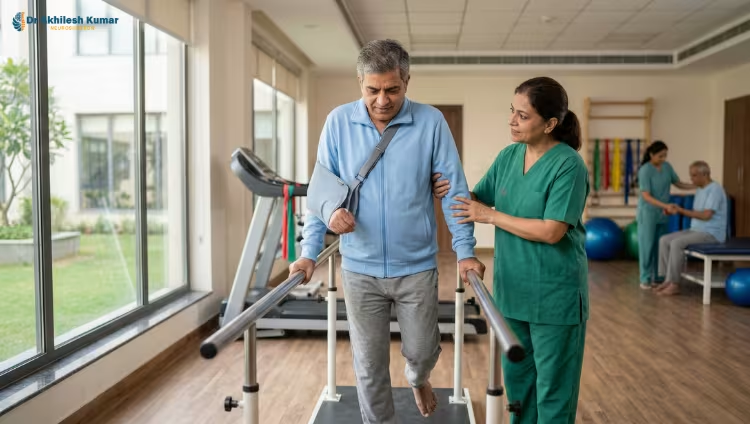
Step 3 — Repeat the Right Movements The brain rewires itself through repetition. Every correctly performed movement builds a stronger connection. But repeating the wrong movement builds the wrong connection. This is why proper guidance from a trained physiotherapist is critical. A rushed gait or incorrect shoulder movement can create long-term problems that are very difficult to reverse.
Step 4 — Treat Spasticity Early Spasticity is when the muscles become very stiff due to abnormal signals from the damaged brain. Many families assume this is just tightness and ignore it. That is a costly mistake. If spasticity is not treated within the first 3 to 6 months, the muscles and joints can permanently shorten and deform — producing a bent wrist, clenched fist, curled foot, or painful shoulder. At that point, rehabilitation shifts from recovery to damage control.
Treatment includes regular stretching, splinting, Botulinum toxin injections, and sometimes oral medication.
What Most People Are Never Told
Recovery can go backwards. A patient who was improving can suddenly worsen. This happens because of untreated depression, a new silent stroke, an infection, uncontrolled blood pressure, or missed medication. Stroke care does not end at hospital discharge. It is a long-term commitment.
“Try harder” is not a strategy. After a stroke, even the smallest movement requires enormous mental effort. The brain is exhausted. Pushing a patient beyond their neurological limit leads to frustration and shutdown — not faster recovery. Patience and encouragement work far better than pressure.
The hand is the hardest part to recover. Shoulder and hip movement tends to return faster. Fine hand movement — gripping, writing, buttoning a shirt — requires intense repetition, sensory retraining, and specific therapy. Generic exercises alone will not restore fine motor control.
Depression slows physical recovery. Up to 50% of stroke survivors experience depression. When mood drops, effort in therapy drops, movement declines, and recovery stalls. Treating depression is not optional emotional support — it is a direct motor recovery strategy.
The unaffected side becomes a problem. When patients stop using the weak side and rely only on the healthy side, the brain begins to prune the weak pathways away. This is called learned non-use. It can undo months of progress. Therapy must actively keep the affected side engaged.
What Long-Term Recovery Looks Like
Many families assume that after one year, therapy can stop. This is one of the most common and damaging mistakes in stroke rehabilitation. Without ongoing maintenance, muscle tone worsens, fitness declines, falls increase, and shoulder pain develops.
A realistic long-term plan includes daily stretching, strength work, cardiovascular exercise, and regular neurological check-ups. Stroke is a chronic vascular condition — not a one-time event that ends at discharge.
As for outcomes: a mild stroke can allow near-full independence. A moderate stroke often allows functional independence with assistive devices. A severe stroke typically requires long-term support. Hand function frequently remains limited in moderate-to-severe cases. That is not pessimism — it is honest planning, and honest planning leads to better care decisions.
When Recovery Stalls — A Simple Checklist
If progress has stopped, ask these five questions before adding more exercises:
- Is spasticity being treated?
- Is depression being managed?
- Is blood pressure under control?
- Is the therapy specific enough for this patient’s needs?
- Is caregiver burnout affecting the quality of home care?
If even one of these is unchecked, throwing more exercises at the problem will not help. Recovery stalls for reasons — and those reasons must be identified and addressed.
Final Thought
Stroke recovery is not a sprint — it is a long, steady journey that demands the right guidance at every step. Whether it is managing spasticity, rebuilding movement, or preventing a setback, every decision matters.
If you or a loved one is dealing with paralysis after stroke, do not wait and do not guess. Consult Dr. Akhilesh Kumar, one of Lucknow’s most trusted Neurosurgeons, and get a clear, personalised recovery plan built around your condition — not a general checklist.
The brain can heal. But it needs the right expert to guide it.
Frequently Asked Questions
Q1. Can a stroke patient ever fully recover from paralysis?
Yes, some patients do achieve full or near-full recovery — particularly those with mild strokes, early treatment, and consistent rehabilitation. However, full recovery is not guaranteed for everyone. The extent of recovery depends on which part of the brain was damaged, how large the damage was, how quickly treatment was received, and how well rehabilitation is followed. Moderate and severe strokes more often result in some lasting weakness, especially in the hands and fingers. What matters most is maximizing the function that is possible — and that looks different for every patient.
Q2. How long does stroke paralysis recovery take?
There is no single answer. The most significant recovery typically happens in the first three months, when the brain is most actively rewiring itself. Meaningful progress can still happen between six months and two years with consistent therapy. Beyond that, improvement is slower but not impossible. Recovery is a long-term process, not a fixed program with an end date. Stopping therapy too early is one of the most common reasons patients do not reach their full potential.
