
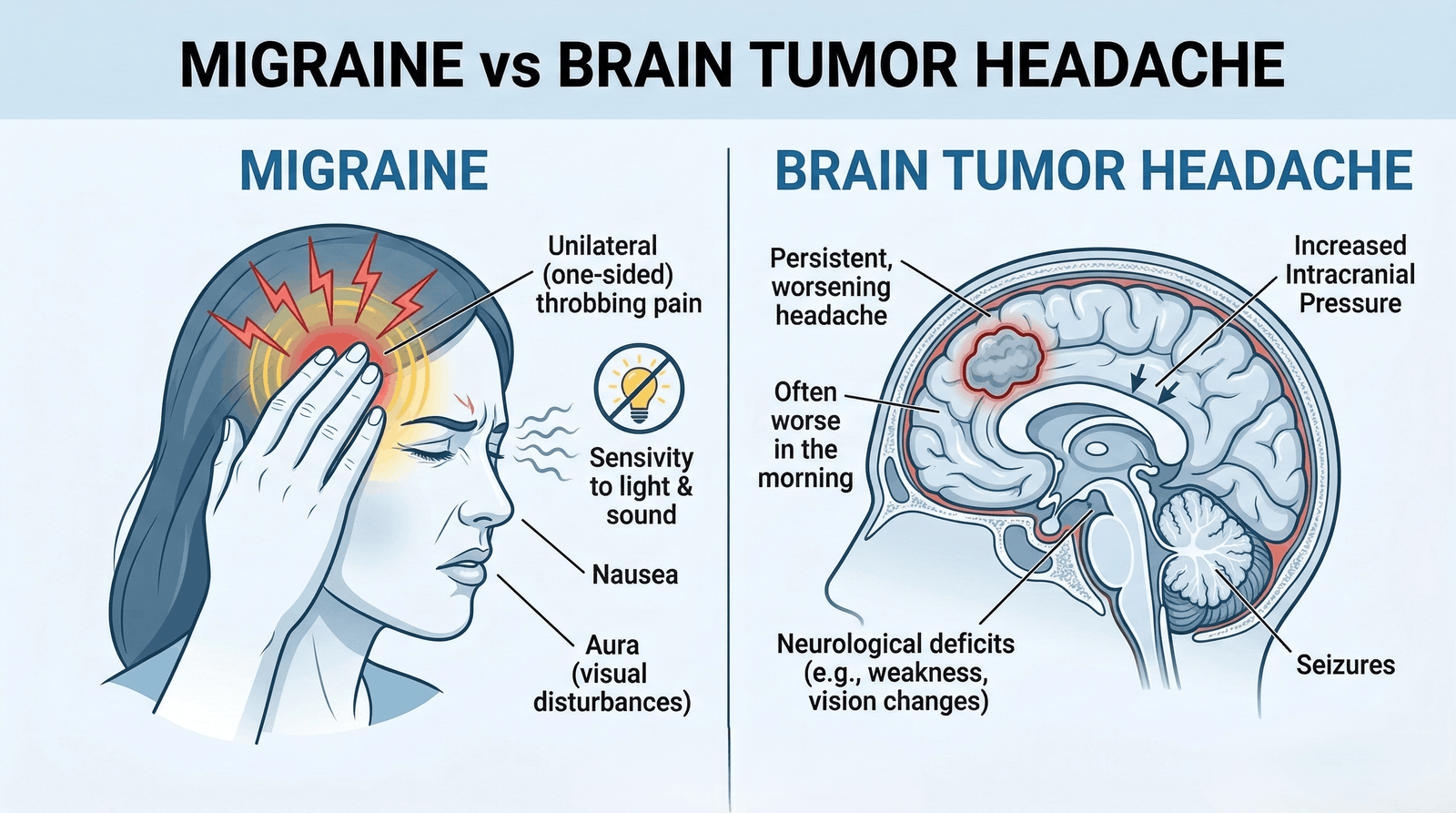
Headaches are one of the most common health complaints worldwide. But when the pain becomes severe, frequent, or unusual, many people start worrying about serious conditions. One of the most common concerns patients search online is Migraine vs Brain Tumor — how to tell the difference.
The truth is that most headaches are caused by migraines or tension headaches, not brain tumors. However, certain headache warning signs can indicate that further medical evaluation is needed.
In this guide, Dr. Akhilesh Kumar, Consultant Neurosurgeon, explains the difference between migraine and brain tumor, common symptoms, and when you should see a neurologist in Lucknow.
What is a Migraine?
A migraine is a neurological condition that causes recurring episodes of moderate to severe headaches. It often affects one side of the head and may last from a few hours to several days.
Millions of people suffer from migraines, and they can significantly affect daily life.
Common Causes of Migraine
Several factors can trigger migraine attacks, including:
-
Stress and anxiety
-
Lack of sleep
-
Hormonal changes
-
Dehydration
-
Certain foods (chocolate, cheese, caffeine)
-
Bright lights or loud noise
-
Weather changes
Common Migraine Symptoms
Typical migraine symptoms include:
-
Throbbing or pulsating headache
-
Pain usually on one side of the head
-
Sensitivity to light (photophobia)
-
Sensitivity to sound
-
Nausea or vomiting
-
Visual disturbances (aura)
-
Blurred vision
Migraine attacks can last 4 to 72 hours, and the symptoms often improve with rest or medication.
What is a Brain Tumor?
A brain tumor occurs when abnormal cells grow in the brain. Tumors can be benign (non-cancerous) or malignant (cancerous).
Although brain tumors are much less common than migraines, they can cause headaches and neurological symptoms if they increase pressure inside the brain.
Types of Brain Tumors
Common types include:
-
Primary brain tumors (originating in the brain)
-
Metastatic tumors (spread from other cancers)
-
Benign tumors such as meningioma
-
Malignant tumors such as glioblastoma
Early Brain Tumor Symptoms
Some brain tumor symptoms may include:
-
Persistent headaches
-
Headache worse in the morning
-
Vomiting without nausea
-
Vision problems
-
Balance issues
-
Seizures
-
Personality changes
-
Weakness in arms or legs
These symptoms occur because the tumor presses on brain tissue.
Migraine vs Brain Tumor – Key Differences
Understanding the Migraine vs Brain Tumor differences can help patients recognize when a headache is normal and when it may require medical attention.
| Feature | Migraine | Brain Tumor |
|---|---|---|
| Pain type | Throbbing or pulsating | Persistent or pressure-like |
| Location | Usually one side of the head | Can occur anywhere |
| Duration | 4–72 hours | Gradually worsening over weeks |
| Associated symptoms | Nausea, light sensitivity, aura | Vomiting, seizures, weakness |
| Pattern | Episodic attacks | Progressive and persistent |
| Relief | Improves with rest/medication | Usually does not improve easily |
This comparison clearly highlights the difference between migraine and brain tumor headaches.
While migraines can be extremely painful, they typically follow a predictable pattern and improve with treatment.
Red Flag Symptoms That Need Immediate Medical Attention
Although most headaches are not dangerous, certain headache warning signs should never be ignored.
Seek medical help immediately if you experience:
-
Sudden severe headache (“worst headache of life”)
-
Persistent headache that keeps worsening
-
Headache with seizures
-
Vision loss or double vision
-
Weakness in arms or legs
-
Difficulty speaking
-
Headache with confusion
-
Headache after head injury
These may indicate serious conditions such as brain tumors, bleeding in the brain, or infections.
Recognizing when headache is serious can save lives.
When Should You See a Neurologist?
You should consult a specialist if:
-
Headaches occur frequently
-
Pain does not respond to medication
-
Headache pattern changes suddenly
-
You experience neurological symptoms
-
Headaches disturb sleep
-
Morning headaches are accompanied by vomiting
If you are experiencing these symptoms, consulting a neurologist in Lucknow can help determine the exact cause.
Early diagnosis ensures proper treatment and peace of mind.
Diagnosis Tests for Severe Headaches
Doctors use several diagnostic tests to distinguish Migraine vs Brain Tumor.
1. MRI (Magnetic Resonance Imaging)
An MRI scan provides highly detailed images of the brain and helps detect tumors, swelling, or structural abnormalities.
2. CT Scan
A CT scan is often used in emergency situations to quickly detect bleeding, swelling, or tumors.
3. Neurological Examination
Doctors evaluate:
-
Vision
-
Balance
-
Reflexes
-
Muscle strength
-
Cognitive function
These tests help identify whether symptoms are caused by migraine or a brain tumor.
Treatment Options
Treatment depends on the diagnosis.
Migraine Treatment
Migraine management may include:
-
Pain relief medications
-
Preventive medications
-
Lifestyle modifications
-
Stress management
-
Sleep improvement
Avoiding triggers plays a major role in preventing migraine attacks.
Brain Tumor Treatment
Treatment may involve:
-
Brain tumor surgery
-
Radiation therapy
-
Chemotherapy
-
Targeted therapy
-
Rehabilitation therapy
Early detection significantly improves treatment outcomes.
Frequently Asked Questions (FAQs)
Can migraines be mistaken for brain tumors?
Yes. Because both conditions cause severe headaches, some patients worry about tumors. However, migraines usually follow a pattern and improve with treatment.
How do I know if my headache is serious?
Headaches that are sudden, worsening, associated with seizures, vision problems, or weakness require immediate medical evaluation.
What are the early signs of brain tumors?
Early brain tumor symptoms may include persistent headaches, seizures, balance problems, vision issues, and personality changes.
Do brain tumors always cause headaches?
No. Some brain tumors may not cause headaches initially. Symptoms depend on the tumor’s size and location.
When should I see a neurologist for headaches?
You should see a neurologist in Lucknow if headaches become frequent, severe, or are associated with neurological symptoms.
Conclusion
Understanding Migraine vs Brain Tumor symptoms can help reduce unnecessary fear and ensure timely medical care.
Most headaches are caused by migraines, which are manageable with proper treatment and lifestyle changes. However, certain headache warning signs should never be ignored.
If you experience persistent or unusual headaches, consult a qualified specialist for evaluation. Early diagnosis ensures better outcomes and peace of mind.
