
How Minimally Invasive Spine Surgery Is Changing the Way We Treat Back Problems
By Dr Akhilesh Kumar | Spine Surgeon in Lucknow
Spine surgery used to mean one thing — a big cut, a long hospital stay, and months of rest before you could get back to your normal life. That was the standard for a very long time. But today, things are very different. New tools and techniques have made spine surgery much safer, faster, and easier to recover from. This is called Minimally Invasive Spine Surgery, or MISS for short.
If you are dealing with back pain, nerve problems, or a spine condition, understanding this newer approach can help you make better decisions about your health. Doctors like Dr. Akhilesh Kumar, who is widely regarded as the Spine Surgeon in Lucknow, are using these advanced techniques to give patients better results with less pain and a faster return to daily life.
What Is Minimally Invasive Spine Surgery?
Minimally invasive spine surgery is not just one technique. It is a group of methods that all share the same goal — treat the exact problem in your spine without causing unnecessary damage to the surrounding muscles, bones, and tissues.
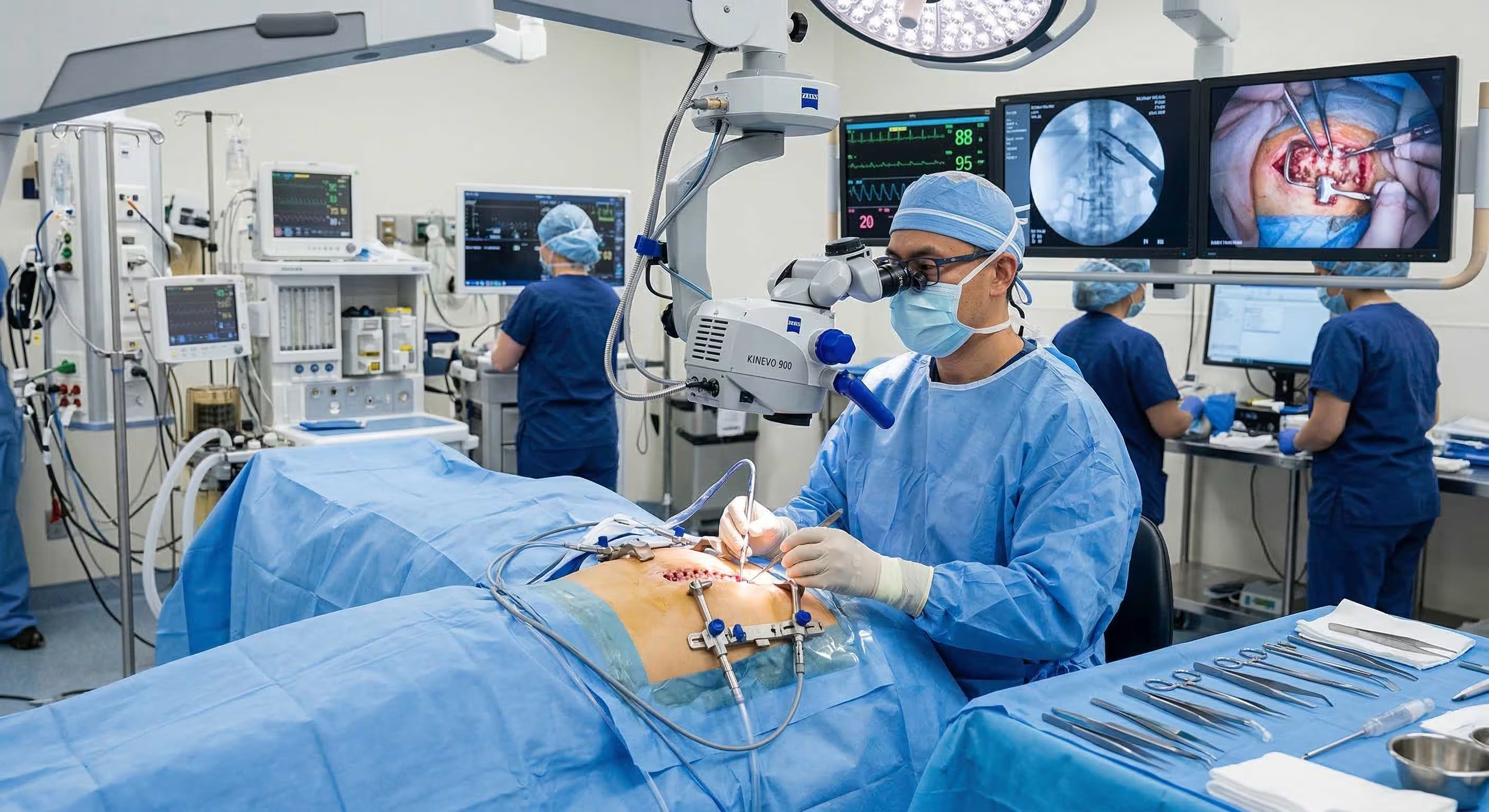
In traditional open surgery, the surgeon makes a large cut and moves muscles aside to reach the spine. This causes a lot of tissue damage. In minimally invasive surgery, the surgeon uses small tubes, tiny cameras, and special instruments to reach the exact problem area through a very small opening. The muscles are gently pushed apart, not cut. This one change makes a huge difference in how a patient feels after surgery.
Common Types of Minimally Invasive Spine Surgery
There are several types of minimally invasive procedures used today, depending on what the patient needs.
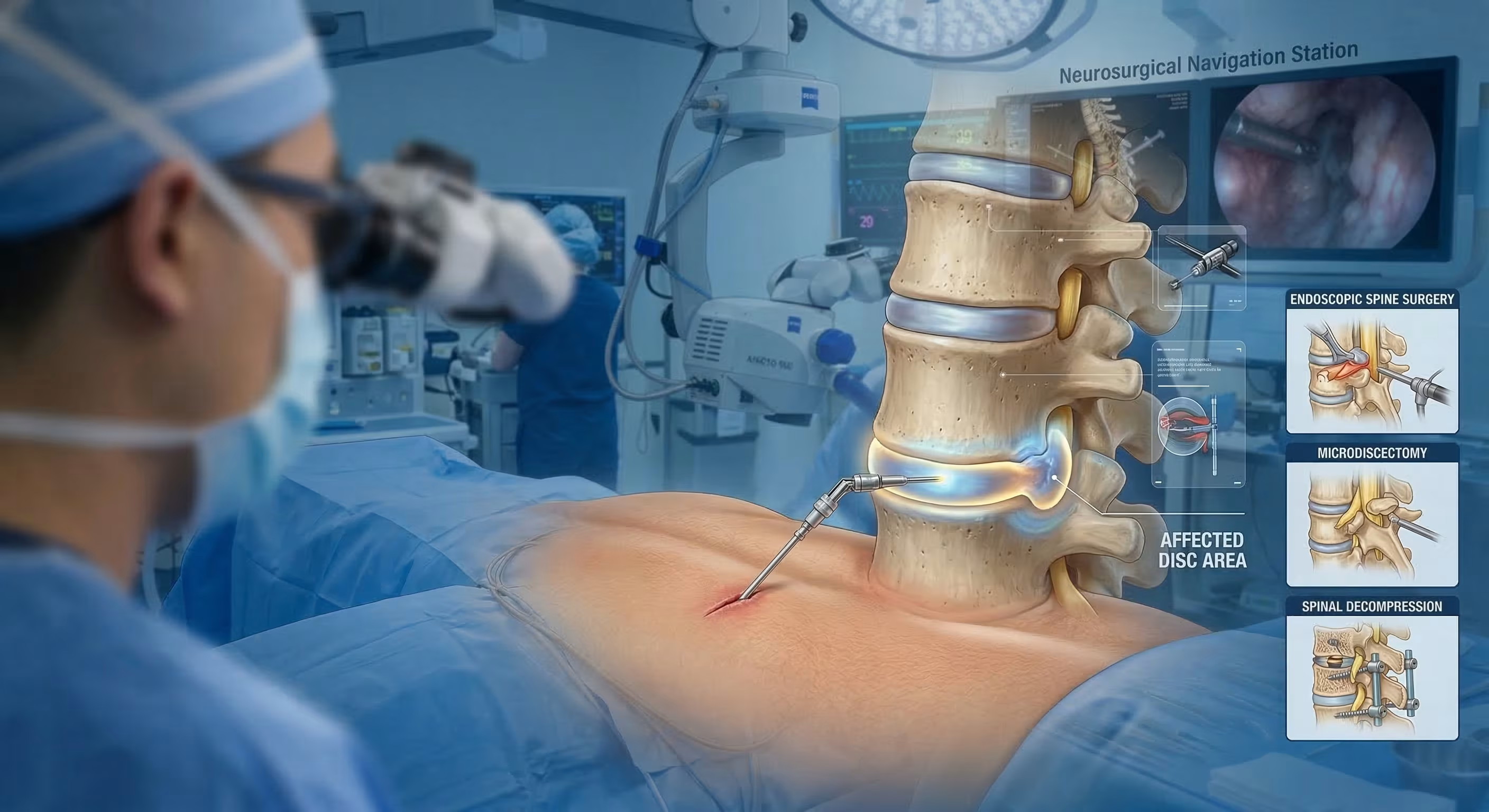
Microdiscectomy is one of the most common. It is used when a disc in the spine is pressing on a nerve. The surgeon removes only the small piece of the disc that is causing the problem, using a microscope to see clearly through a very small incision.
Endoscopic Spine Surgery uses a tiny camera inserted through a small cut. The camera sends live images to a screen, so the surgeon can see exactly what is happening inside the spine. This is especially useful for treating herniated discs and nerve compression.
Minimally Invasive Spinal Fusion is used when two vertebrae need to be permanently joined together. Modern techniques allow surgeons to do this with small tools and image guidance, without making the large cuts that were once required.
Minimally Invasive Decompression is used when the spinal canal has become too narrow, a condition called spinal stenosis. Instead of removing large sections of bone, the surgeon removes only what is needed to relieve pressure on the nerves.
Why This Approach Is Better for Patients
The benefits of minimally invasive surgery go much deeper than just a smaller scar. Here is what really matters for patients.
Less damage to muscles and tissues means your body heals faster. Traditional surgery often strips away muscle from the spine, which takes months to recover. With MISS, muscles are simply moved aside, not cut, so they recover much more quickly.
Earlier nerve decompression is one of the most important benefits. When surgery is less scary and recovery is shorter, patients are more willing to have surgery earlier — before nerve damage becomes permanent. This leads to much better long-term neurological outcomes.
Reduced scarring inside the body is another major advantage. Large surgeries create large healing surfaces, which can lead to internal scar tissue. This scar tissue can cause ongoing back pain after surgery, a condition known as failed back surgery syndrome. Smaller surgeries mean less internal scarring.
Lower risk of infection is directly linked to smaller incisions and shorter hospital stays. The less time a wound is open, and the less time a patient spends in the hospital, the lower the chance of infection.
Faster return to daily life is perhaps what most patients care about the most. With traditional surgery, patients might be in the hospital for several days and on bed rest for weeks. With MISS, many patients are walking the same day and returning to light activities within two weeks.
Recovery Timeline After Minimally Invasive Spine Surgery
| Time After Surgery | What Most Patients Can Do |
|---|---|
| Day 1 | Start walking with support |
| Week 1–2 | Light daily activities at home |
| Week 4–6 | Return to desk jobs and moderate activity |
| 3 Months | Most patients resume normal life |
This table gives a general idea. Recovery depends on the type of surgery, the patient’s age, overall health, and how well they follow their rehabilitation plan. Patients treated by experienced surgeons like Dr. Akhilesh Kumar, the Brain and Spine Surgeon in Lucknow, tend to get very precise, well-planned care that supports faster recovery.
What Are the Real Limitations of Minimally Invasive Surgery?
Most articles only talk about the good side of MISS. But honest medical information must also explain the limitations. Not every patient is the right candidate for minimally invasive surgery, and not every spine condition can be treated this way.
Some conditions need open surgery.
Large spinal tumors, severe spinal deformity like scoliosis or kyphosis, and complex revision surgeries often require wider access to the spine. Trying to force a minimally invasive approach in these situations can lead to incomplete treatment and worse outcomes.
There is a steep learning curve.
MISS procedures require extremely precise movements in a very small working area. Surgeons who are new to these techniques may have more difficulty, which increases the risk of complications like incomplete nerve decompression or longer operation time. This is why the experience of the surgeon matters more than the technology itself.
Radiation exposure is a concern.
Many minimally invasive procedures use X-ray guidance called fluoroscopy to help the surgeon navigate. This increases radiation exposure for both the surgical team and the patient. Modern navigation systems are reducing this problem, but access to this equipment is not equal across all hospitals.
Equipment is expensive.
The special tools required for MISS — including tubular retractors, endoscopes, high-definition microscopes, and navigation systems — are costly. Not every hospital can afford them, which means access to this type of surgery is not available everywhere.
When Minimally Invasive Surgery Is NOT the Right Choice
This is something that many clinics never talk about, but it is very important. There are real situations where traditional open surgery is actually the better and safer option.
If a patient has severe spinal deformity, the spine needs significant repositioning and structural correction. This requires large exposure that small surgical corridors simply cannot provide. Forcing a minimally invasive approach in this case would limit the surgeon’s ability to correct the deformity properly.
If there is a large tumor inside the spinal canal, the surgeon needs full visibility to remove it safely. A narrow working channel would make this very dangerous.
If a patient has already had previous spine surgery, there may be scar tissue from the earlier operation that makes minimally invasive access very difficult. In these revision cases, open surgery is often safer.
A skilled and honest neurosurgeon will always choose the right approach for the patient’s specific condition — not simply the smallest incision. Dr. Akhilesh Kumar, recognised as the Top Neurosurgeon in Lucknow, is known for making patient-specific decisions that prioritise long-term outcomes over short-term appearances.
What Can Go Wrong Even After Successful Surgery?
Even when minimally invasive surgery goes well on the day of the operation, spine disease can sometimes come back. It is important for patients to understand this.
Recurrent disc herniation can happen when the same disc herniates again, months or even years after surgery. Risk factors include heavy physical work, smoking, poor core strength, and incomplete healing of the disc wall.
Adjacent segment degeneration occurs after fusion surgery. When two vertebrae are fused together, the spinal segments above and below them take on more stress. Over time, this extra stress can cause degeneration and new nerve compression at those nearby levels.
Residual stenosis means the nerve compression was not fully relieved by surgery. This is more likely in complex cases with stenosis at multiple levels.
This is why long-term follow-up after any spine surgery is just as important as the operation itself. Surgery is only the first step.
How Technology Is Making MISS Even Better
The future of minimally invasive spine surgery is being shaped by technology that makes the surgeon’s work more precise and safer.
Robotic spine surgery allows robots to assist with placing screws in exactly the right position inside the vertebrae. This reduces human variability and improves accuracy in a way that the human hand alone cannot always achieve.
3D navigation systems use advanced imaging to track instruments in real time during surgery. The surgeon can see exactly where every instrument is at every moment. This means safer screw placement, reduced radiation, and better outcomes.
Next-generation endoscopes offer ultra-high-definition video and angled viewing, allowing surgeons to see into difficult areas of the spine that were previously very hard to access with minimally invasive tools.
These technologies are pushing MISS into areas that were once only possible with open surgery.
What Should a Patient Ask Before Choosing Surgery?
Before agreeing to any spine surgery, patients should ask these important questions.
Is the diagnosis accurate? The MRI images must match your actual symptoms. Surgery done on the wrong area will fail regardless of how advanced the technique is.
How experienced is the surgeon with this specific procedure? Technology is only as good as the person using it. A highly experienced neurosurgeon will give you much better outcomes than a newer surgeon using the latest tools.
Is this the right type of surgery for my condition? Some patients need a combination of decompression and fusion. Others may need open surgery. The right answer depends entirely on your specific diagnosis.
Are there non-surgical options still available? For some conditions, physiotherapy, injections, or medication may still be worth trying before surgery is considered.
When you consult with a highly experienced specialist like Dr. Akhilesh Kumar, the Best Neurosurgeon in Lucknow, you get honest, personalised answers to all of these questions based on your specific situation.
Comparison: Traditional Surgery vs. Minimally Invasive Surgery
Which type of recovery would you prefer after spine surgery?
- Shorter hospital stay (1–2 days) with MISS vs. longer stay (4–7 days) with traditional surgery
- Walking on day 1 with MISS vs. restricted movement for several days with open surgery
- Less blood loss with MISS vs. significant blood loss possible with traditional surgery
- Smaller scar with MISS vs. large incision scar with open surgery
- Suitable for most disc and nerve problems with MISS vs. necessary for complex deformity or large tumours
Frequently Asked Questions (FAQs)
Q1. Is minimally invasive spine surgery suitable for everyone?
No. While MISS works very well for many common spine problems like herniated discs, spinal stenosis, and certain fractures, it is not suitable for severe deformities, large tumours, or complex revision surgeries. A thorough evaluation by a specialist like Dr. Akhilesh Kumar is necessary to determine the right approach for your condition.
Q2. How long does recovery take after minimally invasive spine surgery?
Most patients are walking within 24 hours and can return to light activities within 2 weeks. Full recovery and return to physically demanding work may take 6–12 weeks depending on the procedure and individual health factors.
Q3. Is minimally invasive spine surgery painful?
Patients experience significantly less pain compared to traditional open surgery because there is far less muscle cutting and tissue damage. Pain is well managed with medication in the first few days, and most patients find they need fewer painkillers than they expected.
Q4. Can a herniated disc come back after surgery?
Yes, there is a small chance of recurrent disc herniation. Risk factors include heavy lifting, smoking, and poor core muscle strength. Following your doctor’s advice on activity modification and physiotherapy greatly reduces this risk.
Q5. What makes Dr. Akhilesh Kumar the Best Neurosurgeon in Lucknow for spine surgery?
Dr. Akhilesh Kumar brings extensive training and hands-on experience in both traditional and minimally invasive spine and brain surgeries. His approach focuses on accurate diagnosis, patient-specific treatment planning, and honest communication — ensuring that patients receive the right treatment, not just the most advanced one. He is trusted by patients across Lucknow and the wider region for complex neurological and spine conditions.
Q6. How do I know if I need spine surgery at all?
Spine surgery is usually considered only after non-surgical treatments like physiotherapy, pain management, and rest have been tried without sufficient improvement. If you have progressive weakness, loss of bladder or bowel control, or severe unrelenting pain, you should consult a neurosurgeon without delay.
Q7. Is robotic spine surgery available in Lucknow?
Advanced spine care including image-guided navigation is increasingly available in Lucknow through experienced neurosurgeons. Consulting with Dr. Akhilesh Kumar will give you the most current information on what technologies are available for your specific condition.
Conclusion
Minimally invasive spine surgery has genuinely changed the way spine conditions are treated. Patients suffer less, recover faster, go home sooner, and return to their normal lives with fewer complications. The smaller incisions and tissue-preserving techniques mean that the body heals more naturally, with less internal scarring and less long-term damage.
But it is equally important to understand that MISS is not a universal solution. It works best when the right patient is matched to the right procedure by the right surgeon. Complex cases, severe deformities, and large tumours still need traditional approaches. The real skill in modern neurosurgery is not just knowing how to perform minimally invasive procedures — it is knowing when to use them and when not to.
If you or someone in your family is struggling with back pain, nerve compression, or a spine condition, do not wait until the damage becomes permanent. Seek evaluation from a trusted and experienced specialist. Dr. Akhilesh Kumar, the Best Neurosurgeon in Lucknow, offers comprehensive diagnosis and treatment planning tailored to every patient’s unique needs. With the right guidance, you can make an informed decision about your spine health and take a confident step toward recovery.
For consultations and appointments, reach out to Dr. Akhilesh Kumar’s clinic in Lucknow. Early evaluation leads to better outcomes.
