
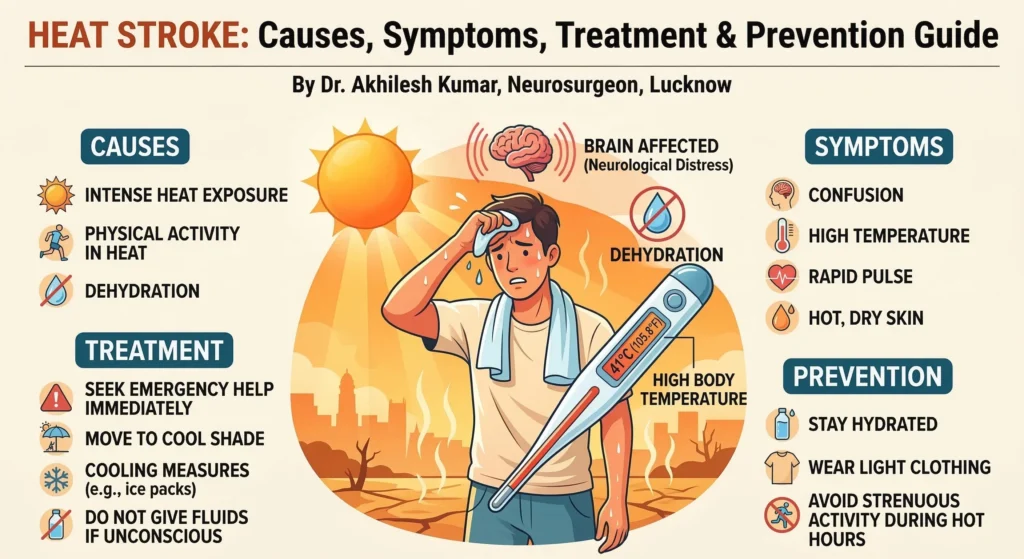
By Dr Akhilesh Kumar | Brain specialist in Lucknow
Heat stroke is one of the most dangerous heat-related illnesses and can become a life-threatening medical emergency if not treated quickly. During extreme summer temperatures, especially in regions with intense heat, the human body can lose its ability to regulate temperature. When body temperature rises above 40°C (104°F), it can damage the brain and other vital organs.
As temperatures continue to rise in many parts of India, heat stroke cases are becoming more common. Early recognition of symptoms and immediate medical intervention are essential to prevent serious complications.
According to Dr. Akhilesh Kumar, neurosurgeon in Lucknow, severe heat stroke can affect the brain and nervous system, sometimes leading to neurological complications if treatment is delayed. Understanding the warning signs and prevention strategies can save lives.
What Is Heat Stroke?
Heat stroke is a severe condition that occurs when the body overheats and cannot cool itself effectively. Normally, the body regulates temperature through sweating and blood circulation. However, during extreme heat exposure or intense physical activity, this cooling system may fail.
When this happens, body temperature rises rapidly, which can lead to:
-
Brain damage
-
Organ failure
-
Severe dehydration
-
Loss of consciousness
Heat stroke requires immediate medical attention, and delaying treatment can lead to permanent health complications.
Types of Heat Stroke
Classic (Non-Exertional) Heat Stroke
This type occurs due to prolonged exposure to high environmental temperatures. It is more common among:
-
Elderly individuals
-
Infants and young children
-
People with chronic illnesses
-
Individuals living in poorly ventilated environments
Exertional Heat Stroke
This type occurs during intense physical activity in hot weather. It commonly affects:
-
Athletes
-
Construction workers
-
Outdoor laborers
-
Military personnel
Exertional heat stroke can develop quickly and may require emergency medical care.
Causes of Heat Stroke
Several factors can trigger heat stroke, particularly during extremely hot weather conditions.
Common causes include:
-
Prolonged exposure to high temperatures
-
High humidity levels
-
Severe dehydration
-
Strenuous physical activity in the sun
-
Wearing heavy or tight clothing
-
Lack of proper ventilation
-
Certain medications affecting body temperature
According to Dr. Akhilesh Kumar, neurosurgeon in Lucknow, dehydration and excessive heat exposure can disrupt brain function, making heat stroke particularly dangerous for neurological health.
Risk Factors for Heat Stroke
Some individuals are more vulnerable to heat stroke than others.
High-risk groups include:
-
Elderly people
-
Infants and children
-
Outdoor workers
-
Athletes
-
Individuals with heart disease or neurological disorders
-
People who consume alcohol frequently
-
Individuals with obesity
These groups must take extra precautions during hot weather.
Symptoms of Heat Stroke
Early Warning Signs
Early symptoms may include:
-
Severe headache
-
Dizziness
-
Weakness or fatigue
-
Excessive thirst
-
Nausea or vomiting
-
Muscle cramps
Severe Symptoms
As the condition worsens, symptoms may include:
-
Extremely high body temperature
-
Hot, dry, or flushed skin
-
Rapid heartbeat
-
Rapid breathing
-
Confusion or disorientation
-
Seizures
-
Loss of consciousness
These symptoms require immediate emergency medical treatment.
Why Heat Stroke Can Affect the Brain
Heat stroke is particularly dangerous because it can directly impact the brain and nervous system.
When body temperature rises excessively:
-
Brain cells may begin to swell
-
Blood flow to the brain may become disrupted
-
Neurological damage may occur
In severe cases, patients may experience:
-
Memory problems
-
Seizures
-
Permanent neurological injury
This is why experts like Dr. Akhilesh Kumar, neurosurgeon in Lucknow, emphasize immediate treatment to prevent long-term brain complications.
Heat Stroke First Aid – What to Do Immediately
If someone shows signs of heat stroke, quick action can save their life.
Follow these steps immediately:
-
Move the person to a cool or shaded place
-
Remove excess clothing
-
Apply cold compresses or ice packs to the neck, armpits, and groin
-
Fan the person to promote cooling
-
Give cool water if the person is conscious
-
Call emergency medical services immediately
Rapid cooling is essential to prevent brain and organ damage.
Medical Treatment for Heat Stroke
At a hospital, doctors focus on lowering the body temperature quickly and stabilizing the patient.
Common treatments include:
-
Intravenous (IV) fluids
-
Cooling blankets or ice packs
-
Oxygen therapy
-
Monitoring vital organs
-
Treatment of complications such as seizures
Severe cases may require neurological monitoring. In such situations, consultation with specialists such as Dr. Akhilesh Kumar, neurosurgeon in Lucknow, may be necessary to assess possible brain-related complications.
Chart 1 – Common Symptoms of Heat Stroke
| Symptom | Severity Level | When It Appears |
|---|---|---|
| Headache | Mild | Early stage |
| Dizziness | Mild to Moderate | Early stage |
| Nausea | Moderate | Developing stage |
| High body temperature | Severe | Advanced stage |
| Confusion | Severe | Critical stage |
| Seizures | Critical | Emergency condition |
This chart helps identify the progression of heat stroke symptoms and allows early intervention.
How to Prevent Heat Stroke
Preventing heat stroke is much easier than treating it.
Stay Hydrated
Drink plenty of water throughout the day, even if you do not feel thirsty.
Avoid Peak Heat Hours
Limit outdoor activities between 12 PM and 4 PM when temperatures are highest.
Wear Light Clothing
Choose loose, breathable fabrics that allow air circulation.
Take Frequent Breaks
Outdoor workers should rest in shaded or cool areas regularly.
Protect Yourself from Sun Exposure
Use hats, umbrellas, and sunscreen when outdoors.
Daily Hydration Guide to Prevent Heat Stroke
| Activity Level | Recommended Water Intake |
|---|---|
| Low activity | 2–2.5 liters per day |
| Moderate activity | 3–3.5 liters per day |
| Outdoor work | 4–5 liters per day |
| Athletes | 5–6 liters per day |
Proper hydration is one of the most effective ways to prevent heat stroke.
Heat Stroke Prevention Tips for Indian Summers
In regions with extreme summer temperatures, additional precautions are necessary.
Helpful tips include:
-
Drink ORS or electrolyte solutions
-
Consume water-rich fruits like watermelon and cucumber
-
Avoid heavy meals during peak heat
-
Keep homes well ventilated
-
Use fans, coolers, or air conditioning
-
Check regularly on elderly family members
These steps significantly reduce the risk of heat-related illnesses.
When Should You See a Doctor?
Seek medical help immediately if someone experiences:
-
Persistent high fever
-
Confusion or unusual behavior
-
Severe dehydration
-
Seizures
-
Fainting or unconsciousness
Delaying treatment can result in serious complications affecting the brain and internal organs.
Patients experiencing neurological symptoms after heat stroke should consult an experienced specialist such as Dr. Akhilesh Kumar, neurosurgeon in Lucknow, for proper evaluation and care.
About Dr. Akhilesh Kumar – Neurosurgeon in Lucknow
Dr. Akhilesh Kumar is a highly experienced neurosurgeon in Lucknow specializing in the diagnosis and treatment of brain and nervous system disorders.
His expertise includes:
-
Brain injury management
-
Neurological emergencies
-
Brain tumor treatment
-
Spine disorders
-
Advanced neurosurgical care
Through patient education and medical expertise, Dr. Akhilesh Kumar, neurosurgeon in Lucknow, aims to raise awareness about conditions such as heat stroke that may affect neurological health.
Conclusion
Heat stroke is a serious and potentially life-threatening condition that requires immediate attention and proper medical care. With rising temperatures, awareness about symptoms, first aid, and preventive measures is essential.
By staying hydrated, avoiding excessive heat exposure, and recognizing early warning signs, individuals can significantly reduce their risk.
Health experts like Dr. Akhilesh Kumar, neurosurgeon in Lucknow, emphasize that early intervention can prevent severe complications, particularly those affecting the brain and nervous system.
Taking simple precautions during hot weather can help protect you and your loved ones from heat stroke.
Frequently Asked Questions
What is the first sign of heat stroke?
The earliest signs usually include dizziness, headache, excessive thirst, and fatigue during hot weather.
What is the difference between heat exhaustion and heat stroke?
Heat exhaustion is a milder heat-related illness, while heat stroke is a severe medical emergency with dangerously high body temperature and possible organ damage.
Can heat stroke affect the brain?
Yes. Heat stroke can damage brain cells and may cause confusion, seizures, or long-term neurological complications.
How long does recovery from heat stroke take?
Recovery time varies depending on severity. Mild cases may recover in a few days, while severe cases may require weeks of medical care.
How can heat stroke be prevented during summer?
Staying hydrated, avoiding direct sunlight during peak hours, wearing light clothing, and taking rest breaks are the best preventive measures.
