
By Dr Akhilesh Kumar | Brain specialist in Lucknow
Brain imaging tests are essential tools in modern medicine for diagnosing and monitoring neurological conditions. When patients experience symptoms such as severe headaches, seizures, dizziness, memory problems, or sudden weakness in the body, doctors often recommend advanced imaging tests to evaluate brain health. Two of the most commonly used brain imaging techniques are MRI (Magnetic Resonance Imaging) and CT Scan (Computed Tomography Scan).
Many patients often feel confused about these two tests and wonder which one is better for diagnosing brain problems. Both MRI and CT scans provide detailed images of the brain, but they work differently and are used in different medical situations.
Understanding the differences between MRI and CT scan can help patients make informed decisions and feel more comfortable when undergoing these tests. Knowing what to expect and why doctors recommend a particular scan can also reduce anxiety and improve the overall diagnostic experience.
This comprehensive guide explains MRI vs CT scan for brain, including how these tests work, their advantages, limitations, and when doctors recommend each one. If you are experiencing neurological symptoms and need expert consultation, Dr Akhilesh Kumar, Brain Specialist in Lucknow, offers advanced diagnosis and treatment for a wide range of brain and nervous system disorders.
Why Brain Imaging Tests Are Important
Brain imaging tests allow doctors to look inside the brain without performing surgery. These tests provide detailed pictures of brain structures, blood vessels, and tissues, helping doctors detect abnormalities that cannot be identified through physical examination alone.
The brain is a complex organ responsible for controlling every function of the body, including movement, memory, speech, and emotions. When something goes wrong in the brain, symptoms can vary widely. Imaging tests help doctors identify the exact cause of these symptoms.
Common conditions diagnosed using brain imaging include:
-
Brain tumors
-
Stroke
-
Head injuries and trauma
-
Brain infections
-
Epilepsy and seizure disorders
-
Brain hemorrhage (bleeding in the brain)
-
Multiple sclerosis
-
Degenerative neurological diseases such as Alzheimer’s disease
Early diagnosis plays a crucial role in treating neurological conditions. Advanced imaging techniques like MRI and CT scans allow doctors to detect problems early, start treatment quickly, and monitor disease progression, which significantly improves patient outcomes.
What Is a CT Scan of the Brain?
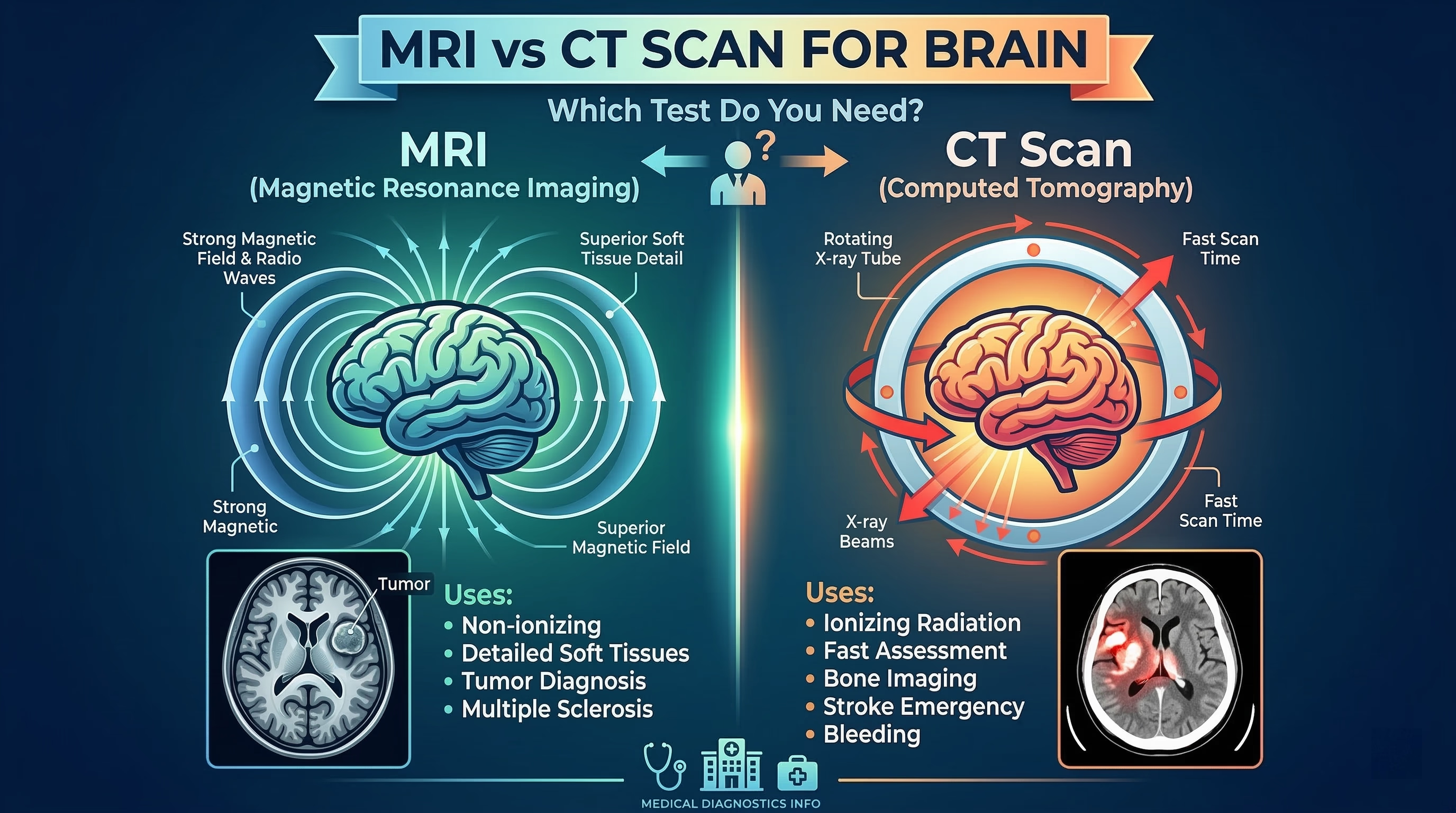
A CT scan (Computed Tomography) is a diagnostic imaging test that uses X-ray technology combined with computer processing to create cross-sectional images of the brain.
Unlike a regular X-ray that shows only a single image, a CT scan captures multiple images from different angles and combines them to create detailed slices of the brain. These images help doctors see bones, blood vessels, and brain structures clearly.
CT scans are widely used in hospitals and emergency departments because they are quick, reliable, and effective in detecting life-threatening conditions.
How a Brain CT Scan Works
During a CT scan procedure:
-
The patient lies on a motorized table.
-
The table moves slowly into a circular scanning machine.
-
X-ray beams rotate around the head.
-
A computer processes the X-ray data to create detailed cross-sectional images.
The entire scan usually takes 5–10 minutes, making it one of the fastest imaging tests available.
Because of its speed and efficiency, CT scans are commonly used in emergency situations where quick diagnosis is critical.
When Doctors Recommend a Brain CT Scan
Doctors often recommend a CT scan in the following situations:
-
Head injury or trauma
-
Suspected brain bleeding
-
Stroke evaluation
-
Skull fractures
-
Brain swelling
-
Sudden neurological symptoms
For example, when a patient arrives at the emergency department with symptoms of stroke or head trauma, doctors often perform a CT scan immediately to determine whether there is bleeding or structural damage in the brain.
Advantages of CT Scan
Some key benefits of CT scans include:
-
Quick imaging results
-
Widely available in hospitals
-
Effective for detecting bleeding or fractures
-
Lower cost compared to MRI
-
Ideal for emergency diagnosis
Because of these advantages, CT scans are often the first imaging test used in emergency neurological cases.
What Is an MRI Scan of the Brain?
An MRI (Magnetic Resonance Imaging) is an advanced diagnostic imaging technique that uses powerful magnetic fields and radio waves to create detailed images of the brain.
Unlike CT scans, MRI does not use radiation. Instead, it uses magnetic energy to generate highly detailed images of soft tissues, nerves, and brain structures.
MRI is particularly useful for detecting subtle abnormalities in the brain that may not be visible on a CT scan.
How Brain MRI Works
During an MRI scan:
-
The patient lies on a scanning table.
-
The table moves into a large cylindrical MRI machine.
-
Powerful magnets align atoms inside the body.
-
Radio waves produce signals that are converted into detailed images.
MRI scans typically take 30 to 60 minutes, depending on the type of scan and the area being examined.
Conditions Diagnosed with Brain MRI
Doctors commonly recommend MRI for diagnosing:
-
Brain tumors
-
Multiple sclerosis
-
Brain infections
-
Nerve damage
-
Brain inflammation
-
Degenerative neurological diseases
Because MRI produces extremely detailed images of soft tissues, it is often considered the best imaging test for evaluating brain structure and nerve pathways.
Advantages of MRI Scan
MRI offers several important benefits:
-
Highly detailed brain images
-
No radiation exposure
-
Better detection of tumors and nerve disorders
-
Accurate evaluation of brain tissues
-
Effective for monitoring long-term neurological conditions
MRI is particularly useful when doctors need to study complex brain structures or subtle abnormalities.
MRI vs CT Scan Comparison
| Feature | MRI Scan | CT Scan |
|---|---|---|
| Technology | Magnetic fields and radio waves | X-ray technology |
| Radiation | No radiation | Uses small amount of radiation |
| Scan Time | 30–60 minutes | 5–10 minutes |
| Image Detail | Excellent soft tissue detail | Good for bones and bleeding |
| Cost | Usually higher | Usually lower |
| Best For | Tumors, nerve disorders, brain tissue | Trauma, fractures, bleeding |
| Availability | Limited in smaller centers | Widely available |
MRI is generally better for detailed brain tissue analysis, while CT scans are better for rapid emergency diagnosis.
Key Differences Between MRI and CT Scan for Brain
Understanding the differences between these two tests helps doctors choose the most appropriate diagnostic method.
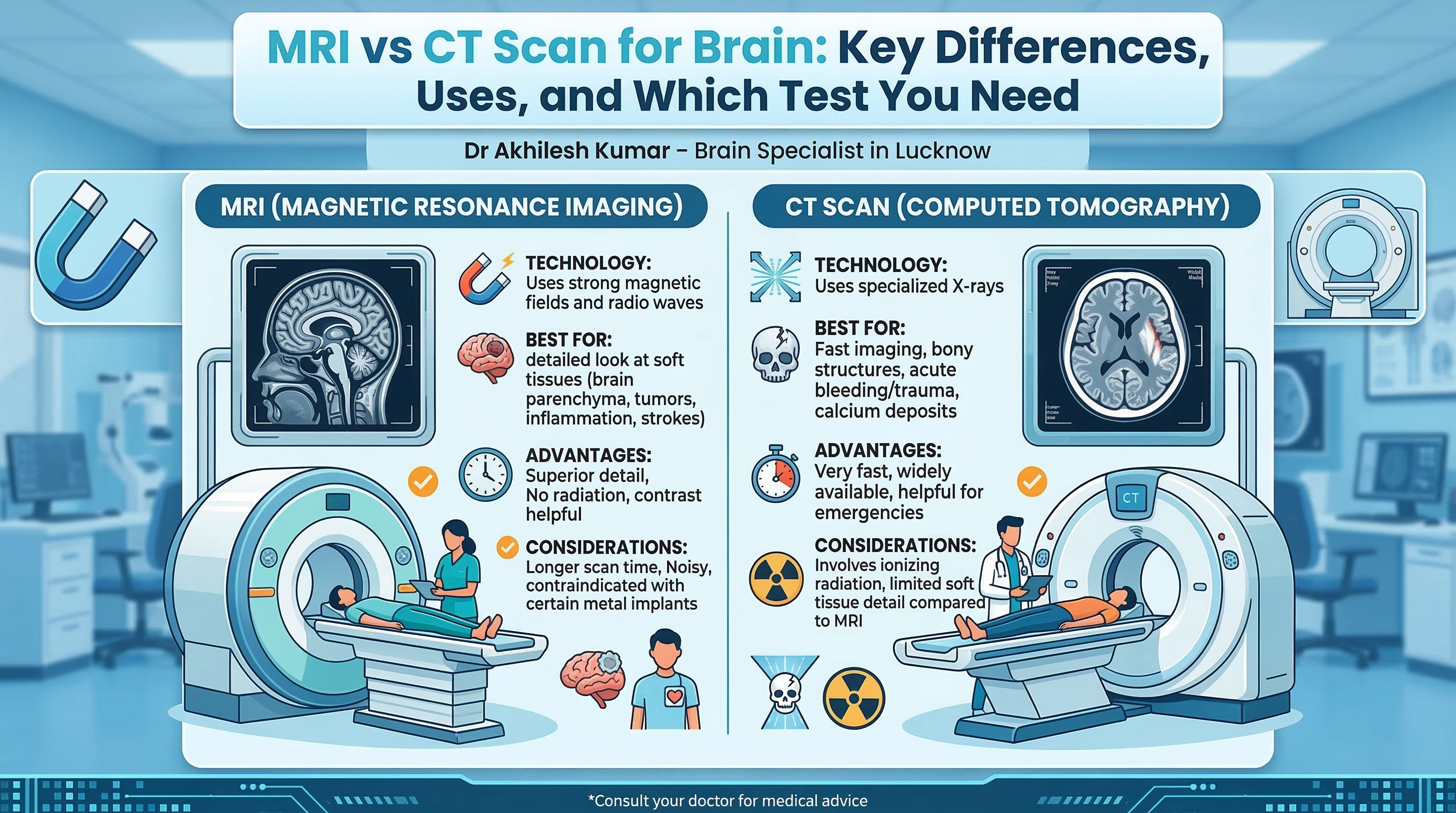
Technology Used
-
MRI: Uses magnetic fields and radio waves
-
CT Scan: Uses X-ray radiation
Both technologies produce detailed images but are designed for different medical purposes.
Speed of the Test
CT scans are much faster and can be completed within minutes. MRI scans take longer because they capture highly detailed images of soft tissues.
Image Quality
MRI provides better visualization of soft tissues, nerves, and brain structures. CT scans are better at detecting bone fractures and bleeding.
Radiation Exposure
MRI does not use radiation. CT scans involve small doses of radiation, which are considered safe when used appropriately.
When Doctors Choose MRI vs CT Scan
| Medical Condition | Preferred Test | Reason |
|---|---|---|
| Head injury | CT Scan | Quickly detects bleeding |
| Stroke (emergency) | CT Scan | Fast diagnosis |
| Brain tumor | MRI | Detailed soft tissue imaging |
| Multiple sclerosis | MRI | Better nerve visualization |
| Skull fracture | CT Scan | Clear bone imaging |
| Brain infection | MRI | More precise tissue detail |
| Chronic headaches | MRI | Detects subtle abnormalities |
These imaging tests complement each other, and doctors choose the appropriate test based on symptoms and medical urgency.
Which Test Is Better for Brain Diagnosis?
There is no single test that is always better than the other. The choice between MRI and CT scan depends on the patient’s symptoms and the condition being evaluated.
When CT Scan Is Better
CT scan is preferred when:
-
A patient has suffered a head injury
-
Doctors suspect brain bleeding
-
The patient shows acute stroke symptoms
-
Rapid diagnosis is required
Because CT scans are quick and widely available, they are often the first test used in emergency situations.
When MRI Is Better
MRI is recommended when:
-
Doctors suspect brain tumors
-
Patients have neurological disorders
-
Detailed brain tissue imaging is required
-
Long-term disease monitoring is necessary
MRI is often more accurate for diagnosing complex neurological diseases.
Safety and Risks of MRI and CT Scan
Both MRI and CT scans are safe when performed under proper medical supervision.
MRI Safety
MRI is considered very safe because it does not use radiation. However, patients with certain conditions may not be suitable for MRI, including those with:
-
Pacemakers
-
Cochlear implants
-
Certain metal implants
-
Metal fragments in the body
Doctors carefully evaluate each patient before recommending MRI.
CT Scan Safety
CT scans use low-dose radiation, but the risk is minimal when used appropriately. Doctors only recommend CT scans when the diagnostic benefits outweigh potential risks.
Sometimes contrast dye is used to improve image quality. In rare cases, patients may experience mild allergic reactions to the contrast material.
What to Expect During MRI or CT Scan
Many patients feel nervous before undergoing imaging tests, but the procedures are simple and painless.
Preparation
Before the scan, patients may be asked to:
-
Remove metal objects such as jewelry or watches
-
Inform the doctor about implants or medical devices
-
Follow instructions regarding food or medication
During the Scan
During the procedure:
-
The patient lies still on the scanning table
-
The machine captures detailed images of the brain
-
The scan is painless
MRI machines can produce loud sounds, but ear protection is usually provided.
After the Scan
Most patients can resume normal activities immediately after the scan. The images are reviewed by a radiologist, and the results are shared with the doctor.
When Should You Consult a Brain Specialist?
You should consult a brain specialist if you experience symptoms such as:
-
Severe or persistent headaches
-
Seizures
-
Sudden weakness or numbness
-
Memory problems
-
Difficulty speaking
-
Head injury
If you are experiencing neurological symptoms, seeking expert medical evaluation is essential. Patients in Uttar Pradesh can consult Dr Akhilesh Kumar, Brain Specialist in Lucknow, for accurate diagnosis and advanced neurological treatment.
Brain Imaging and Early Diagnosis
Early diagnosis of brain disorders significantly improves treatment outcomes. Imaging tests help doctors:
-
Detect diseases at an early stage
-
Plan effective treatment strategies
-
Monitor disease progression
-
Prevent serious complications
Modern imaging technologies have revolutionized neurological care by providing precise and detailed views of the brain.
Conclusion
MRI and CT scans are powerful diagnostic tools used to detect and monitor brain disorders. While CT scans are fast and ideal for emergency situations such as head injuries and bleeding, MRI scans provide more detailed images of brain tissues and are better for diagnosing tumors and neurological diseases.
The choice between MRI and CT scan depends on the patient’s symptoms, medical history, and urgency of diagnosis. Both tests play an essential role in modern neurological medicine.
If you are experiencing neurological symptoms or need expert advice about brain imaging, consult Dr Akhilesh Kumar, Brain Specialist in Lucknow, for comprehensive evaluation and personalized treatment.
Frequently Asked Questions (FAQs)
Is MRI better than CT scan for brain problems?
MRI provides more detailed images of soft tissues and is often better for detecting tumors and nerve disorders.
Which scan is faster for brain diagnosis?
CT scan is faster and commonly used in emergencies.
Is MRI safer than CT scan?
MRI does not use radiation, while CT scan uses small doses of radiation.
Can CT scan detect brain tumors?
Yes, but MRI usually provides more detailed information.
Do doctors sometimes recommend both scans?
Yes, both tests may be used together for a more accurate diagnosis.
