
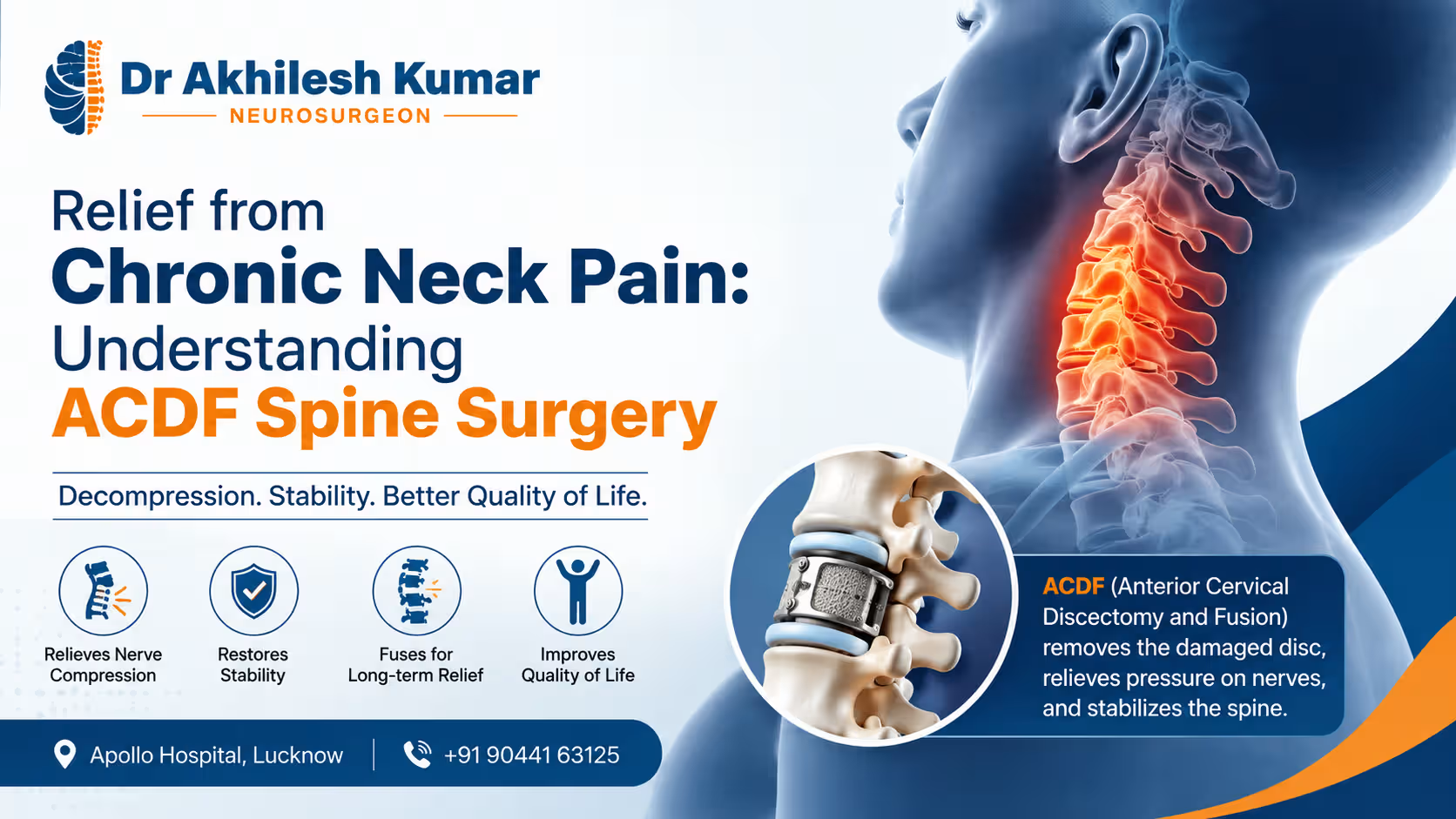
Chronic neck pain can gradually affect sleep, work, mobility, and overall quality of life. When pain is caused by a compressed nerve or spinal cord due to a cervical disc problem, conservative treatment may not always provide lasting relief. For patients who require surgical treatment, ACDF (Anterior Cervical Discectomy and Fusion) is an established procedure used to remove pressure from the spinal cord or nerves.
If you are looking for treatment for chronic neck pain, consulting an experienced specialist is important. Dr Akhilesh Kumar provides evaluation and treatment for complex brain and spine conditions. Patients searching for the Best Neurosurgeon in Lucknow should undergo a proper clinical and imaging-based evaluation before deciding whether surgery is appropriate.
What Is ACDF Spine Surgery?
ACDF stands for Anterior Cervical Discectomy and Fusion. It is a cervical spine surgery performed through the front of the neck.
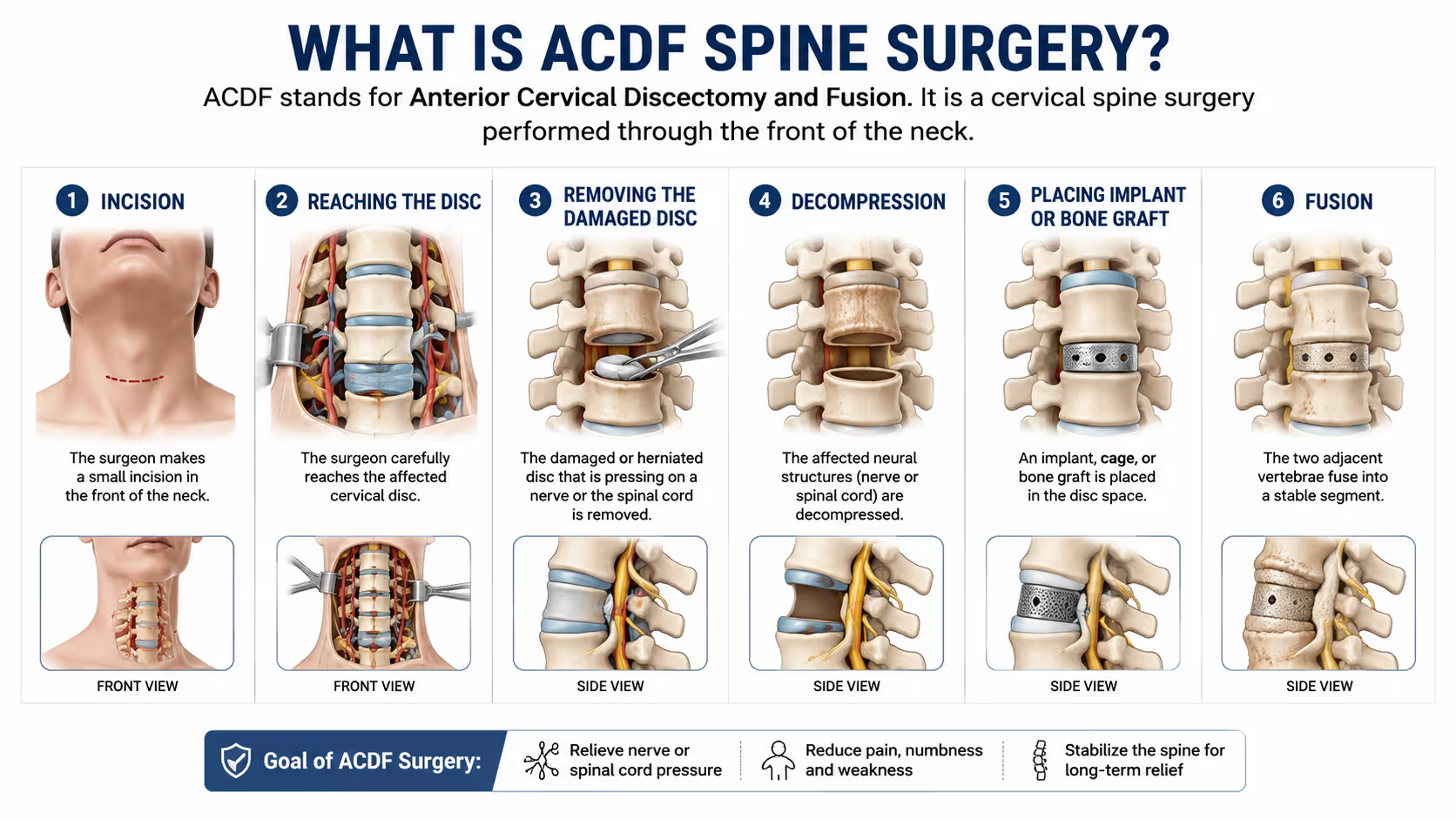
During the procedure, the surgeon:
- Makes a small incision in the front of the neck.
- Carefully reaches the affected cervical disc.
- Removes the damaged or herniated disc that is pressing on a nerve or the spinal cord.
- Decompresses the affected neural structures.
- Places an implant, cage, or bone graft in the disc space.
- Allows the two adjacent vertebrae to fuse into a stable segment.
The main objective is to remove pressure from the nerve or spinal cord while restoring stability to the affected part of the cervical spine.
Why Does Chronic Neck Pain Happen?
The cervical spine contains seven vertebrae separated by discs that act as shock absorbers. With ageing, injury, repetitive stress, or degenerative changes, these discs and surrounding structures may become damaged.
Common causes include:
- Cervical disc herniation
- Cervical spondylosis
- Degenerative disc disease
- Bone spurs
- Cervical spinal stenosis
- Nerve compression
- Spinal cord compression
- Previous cervical spine injury
Not every person with neck pain needs surgery. In many cases, symptoms can improve with medicines, physiotherapy, activity modification, and other non-surgical treatments.
However, persistent neurological symptoms or significant spinal cord/nerve compression may require surgical assessment.
When May ACDF Be Recommended?
ACDF is generally considered when a structural problem in the cervical spine is causing significant symptoms and conservative treatment has not provided adequate improvement.
Common situations include:
1. Cervical Disc Herniation
A damaged cervical disc can bulge or herniate and compress a nearby nerve root, producing neck pain and arm symptoms.
2. Cervical Radiculopathy
Compression of a cervical nerve can cause:
- Neck pain
- Shoulder pain
- Arm pain
- Tingling
- Numbness
- Weakness
3. Cervical Myelopathy
When the spinal cord itself becomes compressed, symptoms can include:
- Hand clumsiness
- Difficulty walking
- Balance problems
- Weakness
- Numbness
- Changes in coordination
4. Cervical Degenerative Disc Disease
Age-related degeneration can cause disc-space narrowing, inflammation, bone-spur formation, and nerve compression.
5. Cervical Spinal Stenosis
Narrowing around the spinal cord or nerve roots can produce neurological symptoms and may require decompression.
The exact indication depends on the patient’s symptoms, neurological examination, MRI findings, overall health, and response to non-surgical treatment.
ACDF Surgery: A Simple Step-by-Step Explanation
Understanding what happens during surgery can make the process less intimidating.
Step 1: Preoperative Evaluation
Your neurosurgeon reviews:
- Medical history
- Symptoms
- Neurological examination
- MRI or other imaging
- Previous treatments
- General health
- Medications and risk factors
Step 2: Anaesthesia
ACDF is usually performed under general anaesthesia, meaning the patient is asleep during the operation.
Step 3: Anterior Neck Approach
The surgeon makes an incision at the front of the neck and carefully moves tissues aside to reach the cervical spine.
Step 4: Disc Removal
The damaged cervical disc is removed to create space and relieve pressure on the affected nerve or spinal cord.
Step 5: Decompression
Any relevant disc material, bone spurs, or other structures causing compression are addressed as appropriate.
Step 6: Fusion
A spacer, cage, bone graft, or other implant is placed between the vertebrae to maintain disc-space height and stability.
Step 7: Closure
The incision is closed and the patient is monitored during recovery.
The precise surgical technique and implant choice vary according to the patient’s condition and the number of spinal levels involved.
ACDF Surgery at a Glance
| Factor | What It Means |
|---|---|
| Full form | Anterior Cervical Discectomy and Fusion |
| Surgical area | Cervical spine/neck |
| Surgical approach | Front of the neck |
| Main purpose | Decompress a nerve or spinal cord |
| Disc removed? | Yes, the affected disc is removed |
| Fusion performed? | Yes |
| Common indications | Disc herniation, radiculopathy, myelopathy, degeneration |
| Anaesthesia | Usually general anaesthesia |
| Recovery | Varies depending on the patient and number of levels |
| Goal | Decompression, stability and symptom improvement |
What Are the Benefits of ACDF?
The potential benefits depend on the underlying diagnosis and severity of nerve or spinal cord compression.
Potential benefits include:
- Relief of arm pain caused by nerve compression
- Reduction of neurological symptoms
- Decompression of the spinal cord
- Stabilisation of the affected cervical segment
- Treatment of structural disc pathology
- Improvement in function and quality of life in appropriately selected patients
ACDF is particularly aimed at treating the underlying structural cause of nerve or spinal cord compression, rather than simply masking pain.
However, no spine surgery can guarantee complete pain relief. The expected outcome depends on the diagnosis, duration of symptoms, neurological damage, number of levels treated, general health, and other individual factors.
Is ACDF Surgery Safe?
ACDF is a commonly performed cervical spine procedure, but like every major operation, it has potential risks.
A 2025 systematic review and meta-analysis covering 222 studies and more than 50,000 patients reported that postoperative complications can occur and that complication risk may increase with factors such as age and the number of fused levels.
Possible complications may include:
- Difficulty swallowing (dysphagia)
- Temporary or persistent hoarseness
- Infection
- Bleeding or neck swelling
- Nerve injury
- Spinal cord-related complications
- Non-union or pseudarthrosis
- Implant or graft-related problems
- Cerebrospinal fluid leak
- Adjacent segment degeneration
- Anaesthesia-related complications
Importantly, complication rates vary considerably between studies and individual patients. The risk profile should therefore be discussed directly with your treating neurosurgeon.
ACDF Recovery: What Should You Expect?
Recovery varies from patient to patient.
Some people can gradually return to normal activities relatively quickly, while complete recovery may take considerably longer, particularly after multilevel surgery or when neurological problems were present before surgery.
Cleveland Clinic notes that full recovery after ACDF can take six months to a year in some patients.
Early recovery may involve:
- Mild neck discomfort
- Soreness around the incision
- Temporary swallowing difficulty
- Fatigue
- Gradual improvement in arm symptoms
- Restrictions on lifting and strenuous activity
Your surgeon will provide individualized instructions regarding walking, work, driving, exercise, medication, wound care, and follow-up.
What Can Help During ACDF Recovery?
Following postoperative instructions is an important part of recovery.
Patients may be advised to:
- Take prescribed medicines as directed
- Keep the surgical wound clean and protected
- Walk regularly as permitted
- Avoid heavy lifting until cleared
- Follow recommended physiotherapy or rehabilitation
- Attend scheduled follow-up appointments
- Avoid smoking because it can negatively affect bone healing
- Report new or worsening neurological symptoms promptly
Do not start strenuous neck exercises independently after surgery. Rehabilitation should be guided by the treating medical team.
ACDF vs Non-Surgical Chronic Neck Pain Treatment
Surgery is not automatically the first treatment for chronic neck pain.
Depending on the diagnosis, non-surgical management may include:
| Non-Surgical Approach | Possible Role |
| Medicines | Pain and inflammation management |
| Physiotherapy | Mobility, strength and posture |
| Activity modification | Reduces aggravating movements |
| Ergonomic correction | Improves neck positioning during work |
| Lifestyle changes | Supports overall spine health |
| Follow-up imaging | Monitors selected conditions |
If symptoms continue despite appropriate conservative treatment—or if there is significant neurological compression—your doctor may discuss surgical options.
When Should You See a Neurosurgeon for Neck Pain?
Not every episode of neck pain requires specialist consultation. However, medical evaluation becomes particularly important when neck pain is persistent, worsening, or associated with neurological symptoms.
Seek medical evaluation if you experience:
- Persistent neck pain
- Pain spreading into the shoulder or arm
- Numbness or tingling
- Hand weakness
- Loss of grip strength
- Difficulty with fine hand movements
- Balance problems
- Difficulty walking
- Progressive weakness
- Symptoms following significant trauma
Sudden or rapidly worsening neurological symptoms require urgent medical attention.
How Is the Need for ACDF Determined?
A neurosurgeon does not recommend ACDF based on an MRI finding alone.
The decision usually involves matching three important factors:
Symptoms + Examination + Imaging
For example:
MRI: Disc herniation →
Symptoms: Arm pain/numbness →
Examination: Corresponding nerve deficit →
Treatment decision: Consider appropriate nerve decompression if conservative treatment is unsuccessful or neurological compromise warrants surgery.
This patient-specific approach helps avoid unnecessary surgery.
Choosing the Right Neurosurgeon for Chronic Neck Pain
Choosing a spine specialist is an important decision because cervical spine surgery involves delicate nerves, the spinal cord, blood vessels, and structures of the throat.
When evaluating a specialist, consider:
- Neurosurgical qualifications
- Experience with cervical spine conditions
- Ability to explain treatment options
- Appropriate use of imaging
- Experience with both surgical and non-surgical management
- Hospital facilities
- Individualised treatment planning
- Clear discussion of benefits and risks
For patients in Lucknow, Dr Akhilesh Kumar at Apollo Hospital Lucknow provides neurosurgical evaluation for brain and spine conditions, including cervical spine disorders.
If you are searching online for the Best Neurosurgeon in Lucknow, or a specialist for chronic neck pain, focus on appropriate diagnosis and personalised treatment rather than choosing a surgeon based solely on online rankings.
Frequently Asked Questions About ACDF Surgery
1. What is ACDF surgery used for?
ACDF is used to remove a damaged cervical disc and decompress a nerve root or spinal cord, followed by fusion of the affected spinal segment. It may be considered for conditions such as cervical disc herniation, radiculopathy, myelopathy, and certain degenerative cervical spine conditions.
2. Is ACDF surgery good for chronic neck pain?
ACDF can be beneficial when chronic neck pain is associated with a specific cervical spine problem that requires surgical treatment. However, ACDF is not appropriate for every type of neck pain. The underlying cause must be identified before surgery is considered.
3. How long does it take to recover from ACDF?
Recovery varies according to the patient, number of spinal levels treated, underlying condition, general health, and neurological involvement. Some activities may resume relatively early, while complete recovery can take several months. Cleveland Clinic notes that full recovery may take six months to a year for some patients.
4. What are the risks of ACDF surgery?
Potential risks include swallowing difficulty, hoarseness, infection, bleeding, nerve or spinal cord complications, non-union, implant-related problems and other surgical or anaesthesia-related complications. Risk varies depending on the patient and complexity of surgery.
5. Can ACDF relieve arm pain and numbness?
When arm pain, numbness, or weakness is caused by compression of a cervical nerve, decompression through ACDF may help relieve symptoms. Outcomes depend on the severity and duration of nerve compression and other individual factors.
6. Will I lose neck movement after ACDF?
Because ACDF permanently fuses the treated spinal segment, movement at that particular level is eliminated. However, the overall effect on neck movement depends on factors such as the number of levels fused and the patient’s existing cervical mobility.
7. Is ACDF better than physiotherapy for neck pain?
Neither treatment is universally better. Physiotherapy and other conservative treatments may be appropriate for many neck conditions. ACDF is considered when there is a specific structural problem requiring surgical decompression or when symptoms persist despite appropriate non-surgical treatment.
8. When should I consult a neurosurgeon for chronic neck pain?
You should consider specialist evaluation if neck pain persists, repeatedly returns, affects daily activities, or is associated with arm pain, numbness, weakness, difficulty walking, balance problems, or hand coordination issues. Early assessment can help identify whether the symptoms are coming from the cervical discs, nerves, or spinal cord.
Final Takeaway
Chronic neck pain should not always be treated with surgery—but persistent symptoms caused by cervical disc or nerve compression deserve proper evaluation.
ACDF spine surgery is an established procedure designed to remove a problematic cervical disc, decompress the affected nerve or spinal cord, and stabilise the involved spinal segment. Evidence shows that ACDF can be effective, but it also has recognised risks, and the decision to operate should always be individualised.
If you are experiencing persistent neck pain, arm pain, numbness, weakness, or symptoms suggestive of cervical spinal cord compression, consult a qualified spine specialist for a detailed assessment.
For patients seeking treatment for Chronic Neck Pain, Dr Akhilesh Kumar at Apollo Hospital Lucknow can provide a specialist neurosurgical evaluation and discuss whether conservative treatment, further investigation, or cervical spine surgery may be appropriate for your condition.
Do not ignore progressive weakness, difficulty walking, loss of hand coordination, or other worsening neurological symptoms.
Medical disclaimer: This article is for educational purposes only and should not replace an in-person consultation, neurological examination, or personalised medical advice. ACDF may not be appropriate for every patient with neck pain.
