

Poasted by Dr Akhilesh Kumar | Neurosurgeon in Lucknow
The human body is like a highly advanced machine, and the brain is its central processing unit. Every time you blink, walk, talk, or remember a childhood memory, your brain and nervous system are at work. But because the nervous system is so complex, sometimes things go wrong.
Many people ignore small signs like a persistent headache or a tingling finger, thinking they are just “tired.” However, these can be warning signs from your nervous system. Knowing when to see a specialist can make a life-saving difference.
In this guide, we will explore the common symptoms that require a neurologist’s evaluation and help you understand when it is time to consult the Best Neurosurgeon in Lucknow
What is a Neurologist and Why Are They Important?
A neurologist is a medical doctor who specializes in treating disorders of the nervous system. This includes the brain, the spinal cord, and all the nerves that run through your body.
Sometimes, a condition might require surgery. In those cases, you need a neurosurgeon. If you are looking for expert care in Uttar Pradesh, seeking the Best Neurosurgeon in Lucknow ensures that you get a precise diagnosis and the most advanced treatment options available today.
Chronic or Severe Headaches
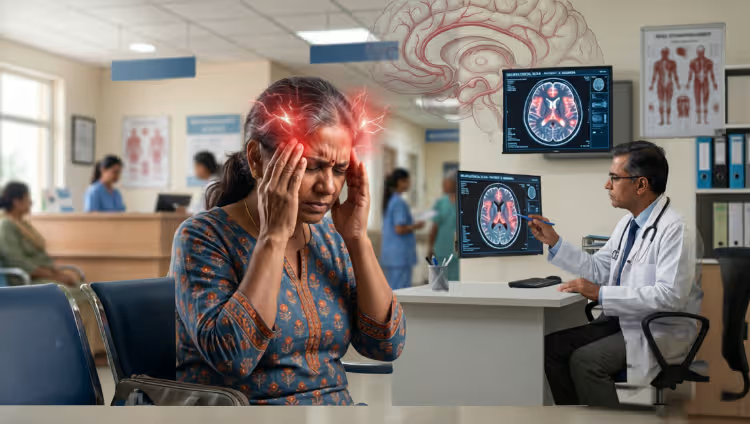
We all get headaches. Sometimes it’s because of dehydration, loud noises, or stress. However, if a headache becomes a regular part of your life, it is a symptom you should not ignore.
When a headache requires a specialist:
-
The “Thunderclap” Headache: A sudden, excruciating pain that feels like the worst headache of your life.
-
Frequency: If you are taking over-the-counter pain medicine more than twice a week.
-
New Patterns: If you are over 50 and start getting a new type of headache you’ve never had before.
-
Accompanying Symptoms: If the headache comes with a stiff neck, fever, or vomiting.
Chronic Pain in the Back or Neck
Pain is your body’s alarm system. While a muscle pull might hurt for a few days, chronic pain that lasts for weeks or months is different.
Often, back pain is linked to the spine. If a disc in your spine moves out of place (a “slipped disc”), it can press against a nerve. This causes sharp, shooting pain that travels down your legs (sciatica).
If you are experiencing persistent back issues, consulting a specialist like the Best Neurosurgeon in Lucknow is vital. A neurosurgeon can determine if the pain is coming from your bones or your nerves.
Dizziness and Balance Issues

Feeling a bit “woozy” when you stand up too fast is normal. But true vertigo—the feeling that the room is spinning—is a neurological symptom.
Watch out for:
-
Unsteadiness: Feeling like you are walking on a boat.
-
Frequent Falls: If you find yourself tripping or falling without a clear reason.
-
Leaning to one side: Difficulty walking in a straight line.
These symptoms could indicate an issue with the brain’s balance centers or the inner ear’s connection to the brain.
Numbness, Tingling, or “Pins and Needles”
That “asleep” feeling in your arm is fine if you were sitting on it. But if you feel numbness or tingling (paresthesia) for no reason, your nerves might be under pressure or damaged.
Areas of concern:
-
One-sided numbness: If one side of your face or body goes numb suddenly, call for emergency help—it could be a stroke.
-
Persistent tingling in the feet: Often a sign of neuropathy or diabetes-related nerve damage.
-
Weakness in grip: If you keep dropping things because your hand feels numb.
Muscle Weakness and Loss of Strength
There is a difference between feeling “tired” and having muscle weakness. True muscle weakness means you physically cannot move a part of your body despite trying.
Examples of neurological weakness:
-
Foot Drop: Your toes drag on the ground while walking.
-
Grip Strength: You cannot open a jar or hold a pen.
-
Sudden Weakness: If your leg gives out while you are standing.
For conditions like these, the Neurologist can perform tests to see if a nerve in your spine is being compressed.
Movement Problems and Tremors
Have you noticed your hands shaking when you try to drink tea? Or perhaps your legs feel very stiff when you try to get out of a chair? Movement issues are often rooted in the brain’s “motor control” center.
-
Tremors: Unintentional shaking of the hands, head, or voice.
-
Rigidity: Muscles that feel stiff and hard to move.
-
Jerky Movements: Uncontrolled twitches or “ticks.”
Memory Loss and Mental Confusion

Forgetting where you put your car keys is a normal part of aging. Forgetting how to use those keys is a neurological concern.
Signs to look for:
-
Confusion: Getting lost in a familiar neighborhood.
-
Language Problems: Forgetting simple words or having trouble following a conversation.
-
Personality Changes: A sudden shift in mood, such as becoming very irritable or paranoid without a cause.
Vision Problems
Sometimes, vision issues aren’t about your eyes; they are about how your brain processes images.
-
Double Vision: Seeing two of everything.
-
Sudden Vision Loss: This is a major red flag and requires immediate attention.
-
Blurry Vision: If it happens suddenly and is accompanied by a headache.
Comparison Chart: When to See a Doctor
| Symptom | Common/Normal | See a Neurologist / Neurosurgeon |
| Headache | Occasionally, linked to stress. | Daily, sudden, or extremely severe. |
| Back Pain | Soreness after lifting weights. | Shooting pain down legs, numbness. |
| Memory | Forgetting a name temporarily. | Forgetting how to perform daily tasks. |
| Dizziness | Standing up too quickly. | Persistent spinning feeling (Vertigo). |
| Weakness | Feeling “wiped out” after work. | Unable to lift a limb or drag a foot. |
| Sleep | One night of poor sleep. | Chronic insomnia or acting out dreams. |
Step-by-Step: What to Expect During Your Evaluation
If you visit the Neurosurgeon in Lucknow, the process is designed to be thorough yet comfortable. Here is how it usually goes:
Step 1: Medical History
The doctor will ask you detailed questions. When did the pain start? Does anything make it better? Is it worse at night?
Step 2: The Physical Exam
They will check your basic health—heart rate, blood pressure, and lung function.
Step 3: Neurological Testing
The doctor will check:
-
Reflexes: Using a small rubber hammer on your knees or elbows.
-
Sensation: Seeing if you can feel a light touch or a cool temperature on your skin.
-
Coordination: Simple tasks like touching your finger to your nose.
Step 4: Diagnostic Imaging (If needed)
If the doctor suspects a physical issue like a tumor or a slip disc, they may order:
-
MRI Scan: To see detailed images of the brain and spine.
-
CT Scan: To look at bone structures.
-
EMG: To check the electrical activity of your muscles.
Why Should You See a Neurosurgeon for Spine Issues?
Many people are confused—should they see an Orthopedic doctor or a Neurosurgeon for back pain?
While orthopedic doctors deal with bones, a neurosurgeon like Dr. Akhilesh Kumar specializes in the nervous system. Since your spinal cord is the “main highway” for your nerves, a neurosurgeon is often the best person to handle complex spine issues. They focus on protecting the delicate nerves while fixing the bone structure.
As the Best Neurosurgeon in Lucknow, he offers:
-
Minimally Invasive Surgery: Smaller cuts and faster recovery.
-
Precision Diagnosis: Using the latest technology to find the exact nerve causing pain.
-
Comprehensive Care: Looking at both surgical and non-surgical ways to heal.
High-Impact FAQs
Q. When should I be worried about a headache?
If a headache is accompanied by a stiff neck, fever, confusion, or if it is the most painful headache you’ve ever had, seek medical help immediately.
Q. What causes sudden numbness in the arms?
It could be anything from a pinched nerve in the neck to a lack of Vitamin B12. However, if it happens suddenly on one side of the body, it could be a sign of a stroke and needs emergency care.
Q. Why am I feeling dizzy all the time?
Chronic dizziness can be caused by problems in the inner ear or the brain. A neurologist can help determine the cause through balance tests and imaging.
Q. What are the signs that I need spine surgery?
Signs include loss of bladder/bowel control, extreme weakness in the legs, and pain that does not go away with rest or medicine.
Q. Is memory loss always a sign of Alzheimer’s?
No. Memory loss can be caused by many things, including thyroid issues, vitamin deficiencies, or even high stress. A proper evaluation is needed to find the real cause.
Q. How do I prepare for my first appointment with Dr. Akhilesh Kumar?
Bring a list of your medications, any previous X-rays or MRI reports, and write down exactly when your symptoms occur.
Conclusion: Don’t Wait for the Pain to Get Worse
Your brain and spine are your body’s most precious assets. Small symptoms are often the body’s way of asking for help. Whether it is a recurring migraine, a tingling sensation in your feet, or chronic back pain, getting an early evaluation can save you from long-term damage.
If you are looking for world-class care, look no further than the Best Neurosurgeon in Lucknow. With years of experience and a patient-first approach, he can help you get back to a pain-free life.
Schedule Your Consultation Today!
Don’t let neurological symptoms hold you back. Expert help is just a phone call away.
-
📍 Location: Apollo Hospitals Lucknow, Uttar Pradesh
-
📞 Call Us: [97603 01339]
-
🌐 Visit Our Website: [https://drakhileshneurosurgeon.com/]
Take control of your health today—because your nervous system deserves the best care!
