
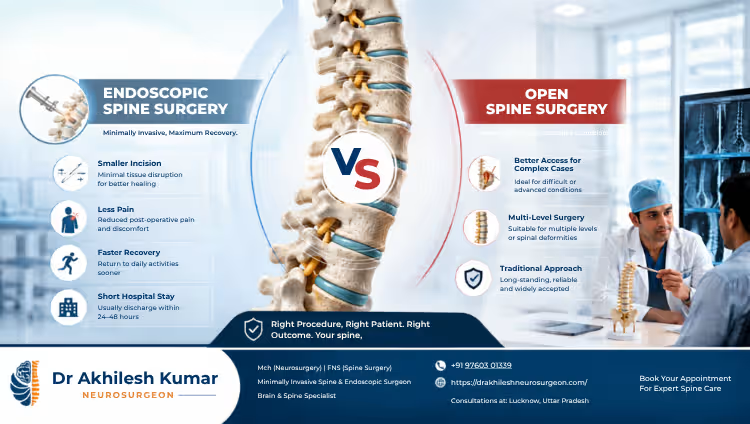
Back pain and spinal disorders have become a global epidemic, affecting millions of people’s quality of life. When conservative treatments like physical therapy and medication fail, surgery often becomes the most viable path to a pain-free life. However, the biggest question patients face today is: Endoscopic Spine Surgery vs Open Surgery—Kaunsi Surgery Hai Better?
Endoscopic spine surgery is a minimally invasive procedure performed through a small incision using a camera, while open spine surgery requires larger incisions. The best option depends on the patient’s condition, anatomy, and specific surgical goals.
Introduction: The Evolution of Spine Care
The landscape of spinal healthcare has undergone a massive transformation over the last two decades. Gone are the days when spine surgery automatically meant a long hospital stay, a large scar, and months of bed rest. With the advent of technology, patients now have choices.
The growing prevalence of spinal disorders—driven by sedentary lifestyles, poor posture, and an aging population—has led to a surge in surgical innovations. Today, patients compare endoscopic and open procedures to find a balance between surgical efficacy and recovery speed. Choosing the right approach is not just about the “newest” tech; it’s about what is medically appropriate for your specific spinal anatomy. This guide will help you navigate these choices with clarity and confidence.
Understanding Common Spine Problems
Before comparing surgical techniques, it is essential to understand why surgery is needed in the first place. Most spinal surgeries aim to relieve pressure on nerves or stabilize the spine.
-
Herniated Disc (Slip Disc): This occurs when the soft inner gel of a spinal disc leaks out through a tear in the outer shell, pressing against nearby nerves.
-
Sciatica: A symptom characterized by radiating pain, numbness, or weakness that travels from the lower back down the leg, usually caused by nerve compression.
-
Spinal Stenosis: A narrowing of the spaces within your spine, which can put pressure on the nerves that travel through the spine.
-
Degenerative Spine Disease: Gradual wear and tear of the spinal discs and joints, often leading to chronic pain.
-
Chronic Back Pain: Persistent pain that does not resolve with non-surgical management and is linked to structural issues in the spine.
What Is Endoscopic Spine Surgery?
Endoscopic Spine Surgery (ESS) is the pinnacle of minimally invasive spine surgery (MISS). It is a “keyhole” procedure that allows surgeons to treat spinal issues with minimal disruption to the surrounding tissues.
-
The Technology: Surgeons use an endoscope—a thin tube equipped with a high-definition camera and a light source.
-
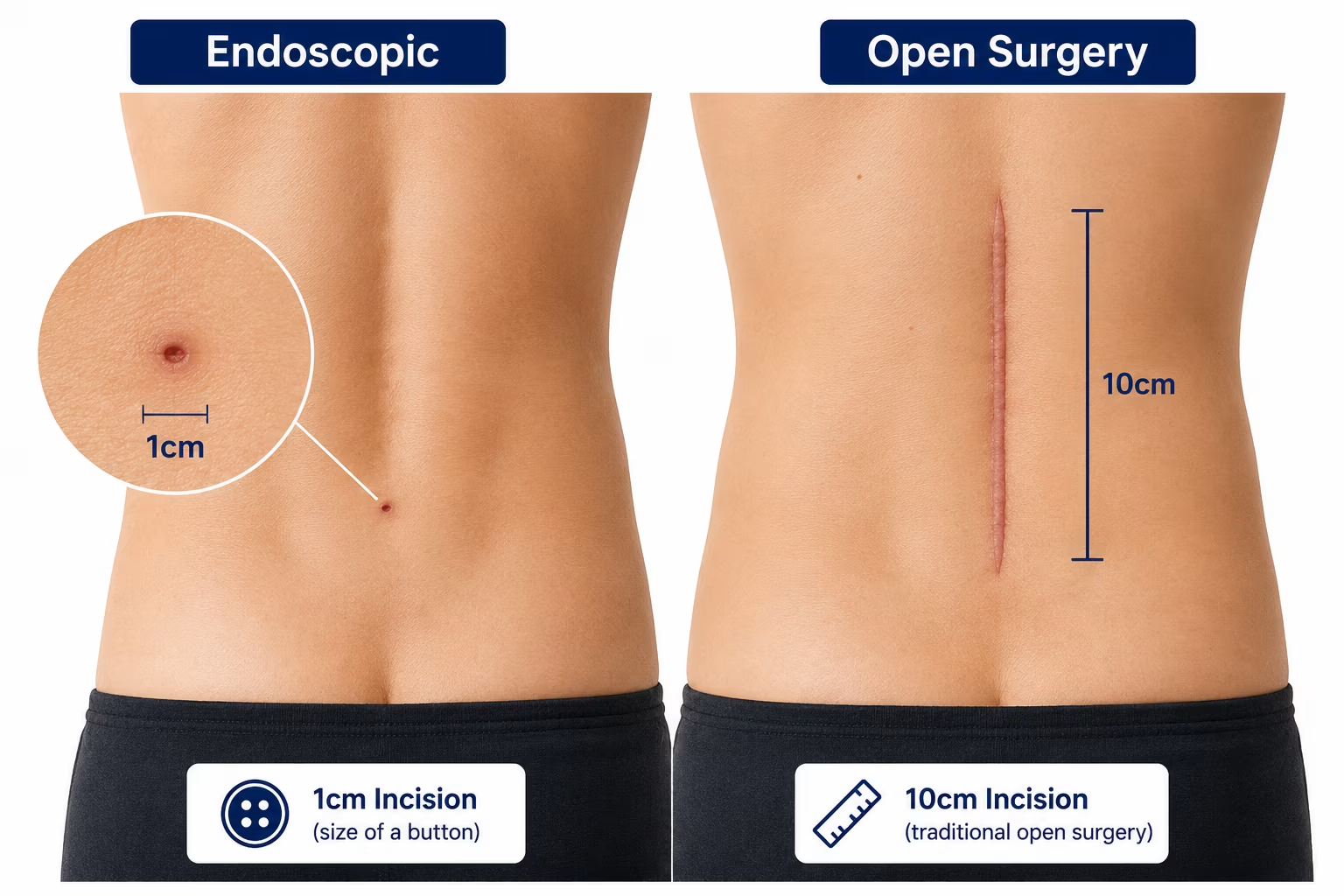
The Technique: A tiny incision (usually less than 1 cm) is made. The endoscope is inserted, providing a magnified view of the spinal canal on a monitor.
-
Precision: Because the surgeon sees the nerves in high definition, they can remove the herniated disc or bone spurs with extreme precision.
-
Conditions Treated: Primarily used for disc herniations, foraminal stenosis, and certain types of nerve compression.
What Is Open Spine Surgery?
Open Spine Surgery is the traditional “gold standard” approach. While it is more invasive, it remains an indispensable tool in a neurosurgeon’s arsenal.
-
The Approach: It involves a larger incision (typically 5 to 10 cm or more, depending on the levels involved).
-
Visualization: The surgeon directly views the spinal structures by retracting the muscles and tissues away from the bone.
-
Versatility: This method is often necessary for complex cases where the surgeon needs to reconstruct parts of the spine or insert hardware like rods and screws.
-
Conditions Treated: Severe spinal instability, complex scoliosis, spinal tumors, and multi-level degenerative diseases.
Endoscopic Spine Surgery vs Open Surgery: Key Differences
To help you decide, let’s look at a head-to-head comparison:
| Feature | Endoscopic Spine Surgery | Open Spine Surgery |
| Incision Size | Tiny (approx. 8mm to 1cm) | Larger (5cm to 15cm) |
| Muscle Trauma | Minimal (muscles are pushed aside) | Significant (muscles are detached/retracted) |
| Blood Loss | Minimal | Moderate to Significant |
| Hospital Stay | Same day or 1 day | 3 to 5 days |
| Recovery Time | 1–2 weeks | 6–12 weeks |
| Post-Op Pain | Lower | Higher |
| Infection Risk | Very Low | Slightly Higher |
| Scarring | Minimal (looks like a freckle) | Linear scar |
Step-by-Step: How Endoscopic Spine Surgery Is Performed
Understanding the process can alleviate surgical anxiety. Here is how a typical endoscopic procedure unfolds:
-
Step 1: Pre-Surgical Evaluation: Extensive imaging (MRI/CT) is used to map the exact location of the compression.
-
Step 2: Anesthesia: Often performed under local anesthesia with sedation or light general anesthesia.
-
Step 3: Small Incision: A tiny “keyhole” incision is made, usually the size of a shirt button.
-
Step 4: Endoscope Insertion: The surgeon guides the endoscope through a metal dilator to the affected area.
-
Step 5: Removal of Compression: Using specialized micro-instruments passed through the endoscope, the surgeon removes the offending disc material or bone spur.
-
Step 6: Closure and Recovery: The endoscope is removed, and the incision is closed with a single stitch or a bandage.
Step-by-Step: How Open Spine Surgery Is Performed
Open surgery is a more comprehensive process:
-
Step 1: Surgical Planning: Detailed mapping of the spinal levels to be addressed.
-
Step 2: Incision Creation: A larger incision is made along the midline of the back.
-
Step 3: Muscle Retraction: The spinal muscles are moved aside to expose the vertebrae.
-
Step 4: Spine Access: Portions of the bone (lamina) may be removed to see the nerves (Laminectomy).
-
Step 5: Correction of the Problem: The surgeon corrects the deformity, removes the disc, or performs a fusion.
-
Step 6: Closure and Recovery: Muscles are moved back into place, and the wound is closed in layers with sutures or staples.
Benefits of Endoscopic Spine Surgery
The shift toward endoscopic techniques is driven by several patient-centric benefits:
-
Reduced Tissue Damage: Because the endoscope travels through natural gaps in the tissue, muscles are not cut or torn.
-
Less Post-Operative Pain: Minimal trauma means the body has less “healing” to do at the surgical site.
-
Faster Return to Normal Life: Most patients are back to office work within a week.
-
Preservation of Spinal Mobility: Since the structural integrity of the spine is barely touched, there is less risk of future instability.
Benefits of Open Spine Surgery
Despite the popularity of minimally invasive methods, open surgery has distinct advantages:
-
Better Access for Complex Cases: If a patient has a severe deformity like Grade 3 Spondylolisthesis, open surgery provides the “room” needed to fix it.
-
Direct Visualization: Surgeons can see the entire surgical field with their own eyes (assisted by loupes or microscopes), which is vital for removing large tumors.
-
Multi-level Surgery: If four or five vertebrae need fusion, open surgery is generally more efficient.
Who Is a Good Candidate for Endoscopic Spine Surgery?
Not every patient is a candidate for ESS. It is most successful for:
-
Patients with a single-level herniated disc.
-
Individuals suffering from foraminal stenosis.
-
Those with sciatica who haven’t responded to 6–12 weeks of conservative care.
-
Patients who want to avoid general anesthesia due to other health risks.
-
Busy professionals or athletes looking for the fastest recovery.
When Is Open Spine Surgery Necessary?
An expert neurosurgeon might recommend open surgery in cases of:
-
Spinal Tumors: Where wide margins are needed.
-
High-Grade Deformities: Like severe scoliosis or kyphosis.
-
Revision Surgeries: If a previous surgery has failed, and there is significant scar tissue.
-
Complex Trauma: When the spine has been fractured and needs extensive stabilization.
Recovery Comparison: Endoscopic vs Open Surgery
| Factor | Endoscopic Surgery | Open Surgery |
| Hospital Stay | 6–24 Hours | 3–7 Days |
| Pain Level | Mild (Managed with OTC meds) | Moderate to High (Requires narcotics) |
| Walking Time | 2–4 hours after surgery | 1–2 days after surgery |
| Return to Work | 3–7 Days (Desk job) | 4–8 Weeks |
| Recovery Duration | 2 Weeks | 3–6 Months |
| Scar Size | <1 cm | 5–15 cm |
Note: Recovery times are estimates and vary based on individual health factors and the complexity of the specific case.
Risks and Complications of Spine Surgery
All surgeries carry risks. While modern techniques have made spine surgery very safe, patients should be aware of:
-
General Risks: Anesthesia reactions, blood clots (DVT), and pneumonia.
-
Endoscopic Risks: Incomplete removal of the disc or dural tears (though rare).
-
Open Surgery Risks: Higher risk of surgical site infection, more significant blood loss, and longer exposure to anesthesia.
-
How Risks Are Reduced: Choosing an experienced neurosurgeon, strictly following pre-op instructions, and maintaining a healthy weight.
Success Rates and Long-Term Outcomes
Research consistently shows that for conditions like herniated discs, both endoscopic and open surgeries have high success rates (between 85% and 95%). The primary difference lies in the short-term recovery period. Long-term, both procedures provide significant pain relief and functional improvement. However, endoscopic surgery is associated with higher patient satisfaction scores due to the ease of the recovery process.

Common Myths and Facts About Spine Surgery
There is a lot of misinformation regarding spine procedures. Let’s debunk them:
-
Myth 1: Spine Surgery Always Causes Paralysis.
-
Fact: With modern neuromonitoring and high-definition cameras, the risk of paralysis is extremely low (less than 1% in routine cases).
-
-
Myth 2: Open Surgery Is Always Better Because the Doctor Can “See More.”
-
Fact: The endoscope provides a magnified, HD view that is often clearer than what the naked eye can see in a deep open incision.
-
-
Myth 3: Endoscopic Surgery Has No Risks.
-
Fact: It is a surgery. While risks are lower, they are not zero. Expert hands are required.
-
-
Myth 4: Surgery Is the Only Treatment Option.
-
Fact: 80-90% of back pain cases resolve with medication and physiotherapy. Surgery is the last resort.
-
-
Myth 5: Recovery Takes Years.
-
Fact: With endoscopic techniques, most patients return to a normal lifestyle within a month.
-
Questions Patients Should Ask Before Spine Surgery
If you are considering surgery, ask your specialist:
-
How many procedures of this type have you performed?
-
Am I a candidate for endoscopic surgery, or do I need an open approach?
-
What are the specific risks given my medical history?
-
What is the expected timeline for me to return to work/sports?
-
What happens if we don’t do the surgery now?
When Should You Consult a Neurosurgeon?
You should not ignore spinal symptoms. Consult a specialist if you experience:
-
Persistent back pain that lasts more than 6 weeks.
-
Pain radiating down the arms or legs (Sciatica).
-
Numbness or tingling in the extremities.
-
Weakness in the legs that causes tripping.
-
Warning Sign: Any loss of bladder or bowel control requires immediate emergency consultation.
For those in Uttar Pradesh, seeking an expert opinion is crucial. For personalized treatment planning and world-class care, you may consult Dr. Akhilesh Kumar, widely regarded as the Best Neurosurgeon in Lucknow. With expertise in both minimally invasive and complex open surgeries, he can help determine which “better” option is actually the “right” option for your spine.
Final Thoughts
The debate between Endoscopic Spine Surgery vs Open Surgery isn’t about which is “better” in a vacuum—it’s about which is better for your specific condition.
Endoscopic surgery is a marvel of modern medicine, offering a faster, less painful path to recovery for thousands. Open surgery remains a vital, life-saving technique for complex spinal reconstructions. The key to a successful outcome lies in accurate diagnosis and the skill of your neurosurgeon.
Don’t live in pain. With the right expert guidance and the appropriate surgical choice, a return to an active, pain-free life is possible.
FAQs
1. Which is better: endoscopic spine surgery or open surgery?
Neither is universally “better.” Endoscopic is superior for faster recovery in simple disc cases, while open surgery is better for complex deformities or multi-level fusions.
2. Is endoscopic spine surgery safe?
Yes, it is considered very safe. It has lower rates of infection and blood loss compared to traditional surgery.
3. How long does recovery take after spine surgery?
Endoscopic recovery takes about 1-2 weeks for office work. Open surgery recovery can take 6-12 weeks for full activity.
4. Can endoscopic surgery treat a slipped disc?
Yes, “Endoscopic Discectomy” is one of the most common and successful ways to treat a slipped disc.
5. Is spine surgery painful?
Post-operative pain is expected, but it is significantly lower in endoscopic procedures. Pain management protocols today are very effective.
6. What is the success rate of endoscopic spine surgery?
The success rate for pain relief is generally between 90% and 95% for properly selected patients.
7. When is open spine surgery necessary?
It is necessary for spinal tumors, severe trauma, high-grade scoliosis, or when multiple vertebrae need to be fused.
8. How soon can I walk after spine surgery?
Most endoscopic patients walk within 2-4 hours. Open surgery patients usually walk within 24 hours.
9. Will I need physiotherapy after surgery?
Yes, physiotherapy is usually recommended for both types to strengthen core muscles and prevent future issues.
10. When should I consult a neurosurgeon for back pain?
If pain is accompanied by leg weakness, numbness, or if it persists despite weeks of rest and medicine, consult a neurosurgeon immediately.
CTA
Persistent back pain, sciatica, numbness, or weakness should not be ignored. Modern spine surgery offers multiple treatment options, and choosing the right procedure depends on your specific condition and overall health.
For expert evaluation and personalized treatment planning, consult Dr. Akhilesh Kumar, recognized by many patients as the best spine surgeon in Lucknow, to understand whether endoscopic or open spine surgery is the right choice for you. Book your consultation today and take the first step toward a pain-free future.
