
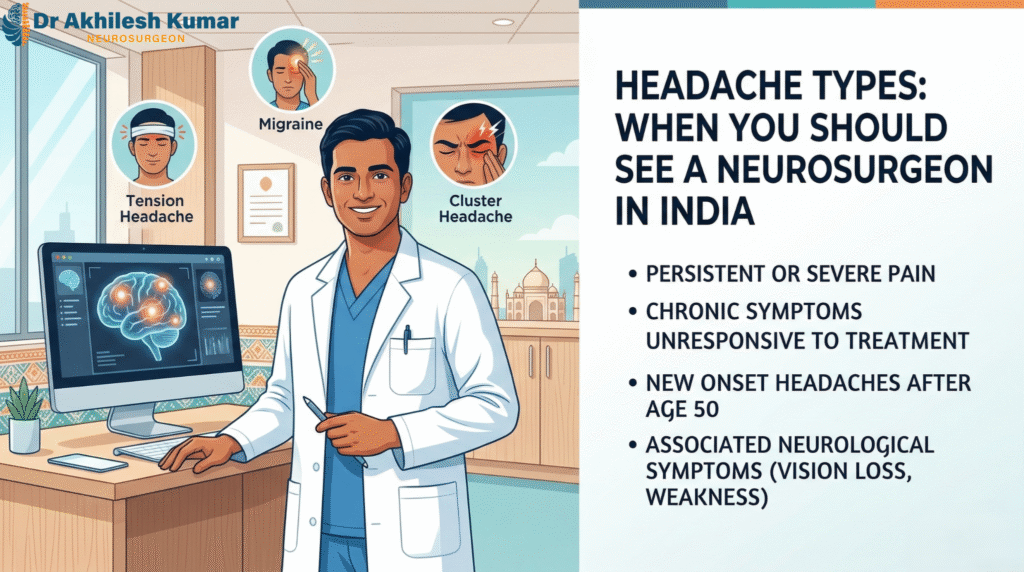
Headache Types: When to See a Neurosurgeon in India
Written with insights from Dr. Akhilesh Kumar – Best Brain Surgeon in Lucknow
Headaches are one of the most common health problems experienced by people of all ages. In many cases, headaches are caused by stress, dehydration, lack of sleep, or lifestyle factors. However, some headaches can be a sign of underlying neurological conditions that require medical attention.
Understanding different headache types and recognizing warning signs can help determine when it is necessary to consult a specialist. If headaches become persistent or severe, consulting a neurologist in Lucknow can help identify the cause and recommend the right treatment.
Common Types of Headaches
Tension Headaches
Tension headaches are the most common type of headache. They usually cause mild to moderate pain that feels like a tight band around the head.
Common symptoms include:
-
Pressure or tightness in the forehead or temples
-
Pain on both sides of the head
-
Sensitivity in the neck and shoulders
These headaches are often linked to stress, fatigue, poor posture, or dehydration.
Migraine Headaches
Migraines are more severe than tension headaches and often occur in repeated attacks.
Typical symptoms include:
-
Throbbing pain on one side of the head
-
Nausea or vomiting
-
Sensitivity to light and sound
-
Visual disturbances known as aura
Migraines can last from several hours to a few days and may significantly affect daily activities.
Cluster Headaches
Cluster headaches are rare but extremely painful headaches that occur in cycles.
Key characteristics include:
-
Severe pain around one eye
-
Sudden onset of headache
-
Redness or watering of the eye
-
Nasal congestion on the affected side
These headaches may occur several times a day during cluster periods.
Sinus Headaches
Sinus headaches occur due to inflammation or infection of the sinuses.
Symptoms may include:
-
Pain around the forehead and eyes
-
Facial pressure
-
Nasal congestion
-
Fever in some cases
These headaches are usually associated with sinus infections.
When Is a Headache a Warning Sign?
Most headaches are harmless, but certain symptoms may indicate a serious neurological problem.
Warning signs include:
-
Sudden severe headache
-
Persistent headaches that worsen over time
-
Headaches accompanied by nausea or vomiting
-
Blurred or double vision
-
Weakness or numbness in the arms or legs
-
Difficulty speaking or confusion
If these symptoms occur, it is important to seek medical evaluation from an experienced neurosurgeon in Lucknow for further investigation.
Headache Symptoms That Require Immediate Medical Attention
Certain headache patterns require urgent medical care.
These include:
-
Sudden thunderclap headache
-
Headache with seizures
-
Headache with fever and stiff neck
-
New headaches after age 50
-
Headaches that wake you from sleep
Ignoring these symptoms may delay the diagnosis of serious neurological conditions.
Conditions That May Cause Serious Headaches
Some headaches may be linked to underlying neurological disorders such as:
-
Brain tumors
-
Brain hemorrhage
-
Meningitis
-
Hydrocephalus
-
Increased pressure in the brain
In such cases, consulting a neurosurgeon in Lucknow can help identify the exact cause and provide specialized treatment if necessary.
When Should You See a Neurosurgeon?
You should consult a specialist if:
-
Headaches occur frequently or become severe
-
Pain does not improve with medication
-
Headaches are accompanied by neurological symptoms
-
Imaging tests show abnormalities in the brain
-
Migraines interfere with daily life
Patients experiencing these symptoms may first consult a neurologist in Lucknow for diagnosis and then receive specialized treatment if a surgical condition is detected.
Diagnosis of Headache Causes
Doctors use several tests to determine the cause of persistent headaches.
Common diagnostic methods include:
-
MRI scan of the brain
-
CT scan
-
Neurological examination
-
Blood tests
-
Lumbar puncture in certain cases
These tests help identify structural or neurological issues affecting the brain.
Treatment Options for Serious Headaches
Treatment depends on the underlying cause of the headache.
Possible treatment options include:
-
Medications
-
Lifestyle modifications
-
Preventive migraine therapy
-
Surgical treatment in rare cases
Early diagnosis helps prevent complications and improves treatment outcomes.
Conclusion
Headaches are a common health issue, but some types may indicate serious neurological conditions. Recognizing warning signs and understanding different headache types can help people seek medical care at the right time.
If headaches become persistent, severe, or are accompanied by unusual symptoms, consulting a qualified specialist is important. Early evaluation ensures accurate diagnosis and appropriate treatment.
Frequently Asked Questions (FAQs)
What are the most common types of headaches?
The most common types include tension headaches, migraines, cluster headaches, and sinus headaches.
When should I see a doctor for headaches?
You should seek medical help if headaches are severe, persistent, or accompanied by symptoms such as vision problems, vomiting, or weakness.
Can headaches indicate serious brain conditions?
While most headaches are harmless, persistent headaches combined with neurological symptoms may indicate serious conditions that require medical evaluation.
What tests diagnose serious headache causes?
Doctors may use MRI scans, CT scans, neurological examinations, and blood tests to identify the cause of severe headaches.
