
Posted By Dr Akhilesh Kumar | Brain Surgeon in Lucknow
Paralysis recovery is a long journey. Most patients and caregivers feel confused because they do not know where to start.
The good news is that you can begin recovery at home with the right exercises and the right approach.
However, doing the wrong exercises at the wrong time can actually slow down recovery. That is why this guide explains not just what to do, but also when and how to do it.
If you want professional guidance, always consult the Neurosurgeon in Lucknow before starting any home physiotherapy program.
What Most People Get Wrong About Paralysis Recovery
Many people think paralysis recovery is only about making muscles stronger.
That is not true.
Paralysis recovery is mainly about retraining your brain. When a stroke or brain injury happens, the brain loses its connection with certain muscles. Exercises help rebuild that connection over time.
This process is called neuroplasticity. It means the brain can form new pathways when it is challenged repeatedly with the right movements.
So if you do exercises without proper mental focus, the brain stays passive and recovery slows down significantly.
Types of Paralysis Recovery Exercises for Home
Here are the most common and effective exercises used in home physiotherapy.
1. Passive Range of Motion Exercises
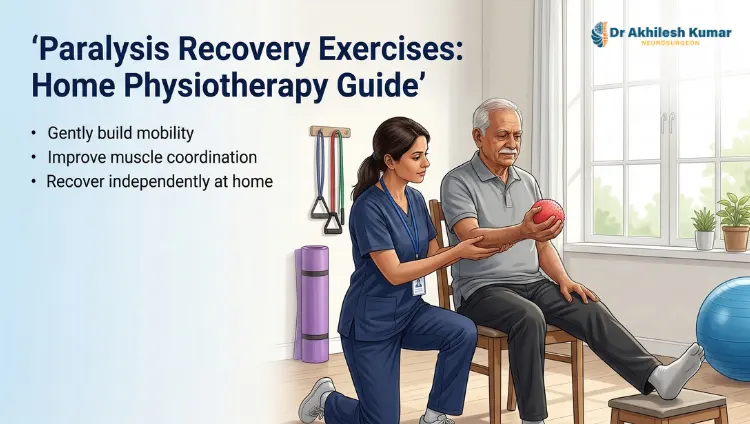
In this exercise, the caregiver gently moves the patient’s arms or legs.
The goal is to prevent joints from becoming stiff. It does not build strength. But it keeps the joints ready for when active movement returns.
This is usually the first exercise to start after paralysis.
2. Active Assisted Movement
Here, the patient tries to move on their own while the caregiver provides support.
This is where real brain rewiring begins. The patient must mentally try to move, even if very little movement happens.
Starting too early or too late can both create problems. A specialist can guide you on the right timing.
3. Hand Grip and Opening Exercises
These exercises use soft balls or therapy putty to restore finger movement.
Hand recovery is usually the slowest part of stroke rehabilitation. It can take several months. That is completely normal.
Focus on both gripping and opening the hand. Most patients can grip but struggle to open their fingers. Both need equal attention.
4. Leg Strengthening and Standing Practice
This includes assisted walking, knee extension exercises, and ankle movement training.
However, leg strength alone does not restore walking. Balance and coordination matter just as much. Standing with support, even before walking, is a critical step that many patients skip.
Recovery Phases You Must Understand
Most guides skip this part. But understanding recovery phases can completely change how you approach physiotherapy at home.
Phase 1 — Flaccid Stage: Muscles feel weak and floppy. There is little to no movement. Focus on passive exercises, positioning, and preventing stiffness.
Phase 2 — Spastic Stage: Muscle tone increases. Movements appear but feel stiff and uncontrolled. Avoid aggressive strengthening here. Focus on gentle stretching and tone management instead.
Phase 3 — Controlled Movement Stage: The patient starts to regain voluntary control. This is the right time to begin coordination training, balance work, and walking practice.
Using the wrong exercise in the wrong phase can worsen spasticity or delay recovery. Always match the exercise to the phase your patient is currently in.
Why Recovery Sometimes Stalls at Home
Even with daily exercises, progress can slow down or stop. Here are the three most common reasons.
Reason 1 — Exercises Without Brain Engagement
When the caregiver moves the patient’s limbs mechanically, the brain stays passive.
For neuroplasticity to work, the patient must mentally try to move. Intention, attention, and repetition together create brain rewiring. Without mental effort, exercises become physical movements with no neurological benefit.
Reason 2 — Spasticity Is Ignored
After a stroke or brain injury, muscles can become stiff. This condition is called spasticity.
Warning signs include a clenched fist, a bent elbow that does not straighten, or a stiff ankle pointing downward. Doing strengthening exercises against tight muscles can make spasticity worse. Always address spasticity first before adding strength training.
Reason 3 — Learned Non-Use
If the healthy limb does all daily tasks, the brain slowly stops trying to use the affected limb.
This is called learned non-use. Even if recovery potential exists, the brain gives up on the affected side. Involve the affected hand or leg in simple daily tasks as much as possible to prevent this from happening.
Simple Daily Routine for Home Physiotherapy
Instead of random exercise sessions, follow a structured daily plan. Short and consistent sessions work better than long and irregular ones.
Morning Session — 15 to 20 Minutes Passive stretching of arms and legs Shoulder mobility exercises
Afternoon Session — 15 to 20 Minutes Assisted arm movements Hand opening and closing exercises
Evening Session — 15 to 20 Minutes Sitting balance practice Supported standing with help
A tired brain learns less. So keep each session short, focused, and regular every single day.
Warning Signs That Need Specialist Attention
Home physiotherapy has its limits. Watch for these red flags and consult the Best Neurosurgeon in Lucknow immediately if you notice any of them.
No improvement after 8 to 12 weeks of regular exercises Muscles becoming stiffer instead of improving Severe loss of balance or sudden falls Difficulty swallowing or speaking. Any new or worsening neurological symptoms
These signs can indicate deeper neurological damage that home exercises alone cannot fix.
The Role of the Caregiver in Recovery
Home physiotherapy is almost never done alone. A caregiver is almost always involved. But caregiver fatigue is a real problem that most guides ignore.
When caregivers are exhausted, daily routines break down. And when routines break, recovery stalls.
Keep these simple tips in mind to avoid burnout.
Keep sessions short and manageable. Track small improvements, not just big milestones. Ask for help from other family members. Take rest when needed. Your health directly affects the patient’s recovery.
The Honest Truth About Long-Term Recovery
Full recovery is not guaranteed for every patient. That is something families rarely hear early enough.
Recovery depends on the size of the brain injury, the location of the damage, the patient’s age, and how consistent rehabilitation is.
However, recovery can continue for years, not just weeks or months. The brain keeps forming new connections as long as the patient keeps practicing. This is exactly why long-term consistency matters more than short bursts of intense effort.
Do not give up after the first few months. Keep going.
Frequently Asked Questions
Q1. How many times a day should we do physiotherapy at home?
Two to three short sessions per day are better than one long session. Each session should last 15 to 20 minutes. The brain learns better when there is rest between practice sessions.
Q2. When should physiotherapy start after a stroke?
It should start as early as the doctor allows, usually within 24 to 48 hours if the patient is medically stable. Early movement prevents stiffness and helps the brain begin rewiring sooner.
Q3. The patient’s hand is not recovering even after months. Is that normal?
Yes, it is normal. Hand and finger recovery is the slowest part of stroke rehabilitation. It can take 6 to 12 months or even longer. Keep doing finger exercises daily and stay consistent.
Q4. What is spasticity and how do we manage it at home?
Spasticity means the muscles become stiff and tight after a brain injury. Gentle stretching and correct positioning help manage it at home. Do not push against tight muscles. If spasticity is getting worse, consult a doctor right away.
Q5. Is walking possible after complete paralysis?
It depends on the extent of the brain damage. Many patients do regain the ability to walk with consistent physiotherapy. Balance training and supported standing are the first steps toward walking recovery.
Q6. When should we see a neurosurgeon instead of just doing physiotherapy?
If there is no improvement after 8 to 12 weeks, if the cause of paralysis is unclear, or if new symptoms appear, it is time to see a specialist. The Best Neurosurgeon in Lucknow can identify whether the underlying cause needs medical or surgical treatment.
Q7. Is paralysis from a brain tumor treated the same as stroke paralysis?
No. Paralysis caused by a brain tumor, spinal injury, nerve damage, or Bell’s Palsy each requires a completely different treatment approach. A proper diagnosis from a qualified neurosurgeon is always the most important first step.
Conclusion
Paralysis recovery is possible with the right exercises, done at the right time, and with the right mindset.
Remember these key points. Exercises must match the phase of recovery. Brain engagement matters as much as physical movement. Short and consistent sessions beat long and irregular ones. Caregiver health is just as important as patient health.
Most importantly, do not hesitate to seek expert help when home exercises are not enough.
For a proper evaluation and personalized treatment plan, consult the Best Neurosurgeon in Lucknow today and take the right step toward recovery.
