
Posted By Dr Akhilesh Kumar | Best Neurosurgeon in Lucknow
Most people think mini-stroke symptoms are just a “smaller” version of a real stroke. That’s not quite right — and that misunderstanding can cost lives.
Let’s break this down in plain language.
What Is a Mini Stroke (TIA)?
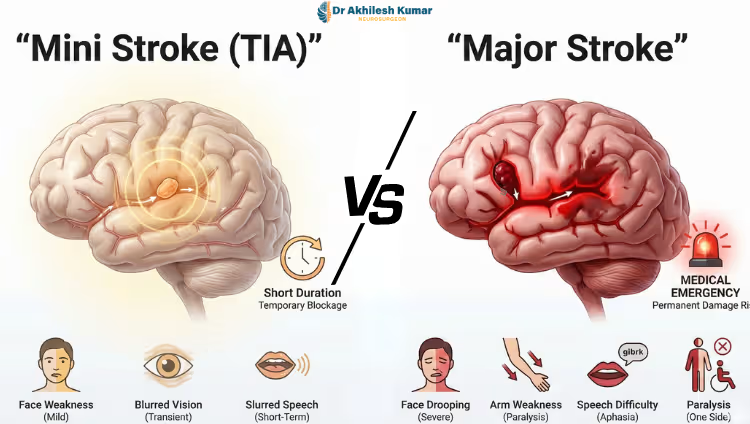
TIA stands for Transient Ischemic Attack. A mini stroke happens when blood flow to the brain is briefly blocked — and then restored before brain cells die.
The keyword is before. That’s the only reason symptoms go away.
Here’s what actually happens inside the brain during a TIA: a small clot blocks a brain artery, blood flow drops, your body’s backup circulation partially kicks in, the clot dissolves or moves, and blood flow comes back before permanent damage occurs.
So yes, symptoms disappear. But the underlying problem — whatever caused that clot — is still there.
What Is a Major Stroke?
A major stroke happens when blood flow is blocked long enough that brain cells actually die. Dead brain cells don’t come back. That’s why effects like paralysis, speech problems, or memory loss can be permanent.
Most strokes are ischemic (caused by a clot). Some are hemorrhagic (caused by a bleed). Both are serious, and both need immediate treatment.
Mini Stroke vs Major Stroke: Side-by-Side Comparison
| Feature | Mini Stroke (TIA) | Major Stroke |
|---|---|---|
| Blood flow blocked? | Yes, briefly | Yes, for longer |
| Brain cells die? | No | Yes |
| Symptoms last? | Minutes to hours | Hours, days, or permanent |
| Shows on CT scan? | Often not | Usually yes |
| Emergency? | Yes, absolutely | Yes, absolutely |
| Risk of full stroke after? | 5–10% within 7 days | Ongoing long-term risk |
| Needs hospital evaluation? | Yes, same day | Yes, immediately |
Warning Signs to Never Ignore
Most people know the FAST test — Face drooping, Arm weakness, Speech difficulty, Time to call emergency. That’s a good start, but not the full picture.
Strokes affecting the back of the brain can look very different. Watch for sudden severe dizziness, loss of balance, double vision, sudden vomiting with no reason, or collapse without warning.
Mini strokes can show up as a few seconds of speech loss, temporary blindness in one eye, sudden numbness on one side, or brief confusion that clears up quickly.
If any of these happen — even for just a few minutes and even if they go away completely — treat it as an emergency.
The 48-Hour Window That Most People Miss
Here’s something many articles don’t tell you: the first 48 hours after a mini stroke are the most dangerous.
The risk of a full stroke is highest in this window, not later. The clot source may still be active. A heart rhythm problem like AFib may still be firing. An unstable plaque in a neck artery may still be rupturing.
This is exactly why “the symptoms went away, so I’m fine” thinking is so dangerous. You’re not treating what happened. You’re trying to prevent what comes next.
Silent Strokes — The Hidden Problem
Not all strokes announce themselves. Repeated tiny blockages over months or years can slowly damage the brain without obvious symptoms. People notice they’re more forgetful, slower in thinking, less steady on their feet — and they blame aging.
Often, it’s vascular brain injury. And it’s preventable if caught in time.
Long-Term Risk: What Happens If You Ignore It
A single mini-stroke is not just a warning — it’s a signal that the entire vascular system is under stress. Untreated, repeated events lead to vascular dementia, difficulty walking, emotional changes, and increasing fall risk over time.
The good news: controlling blood pressure, blood sugar, cholesterol, and stopping smoking dramatically reduces recurrence risk. These aren’t optional lifestyle suggestions — they’re the actual treatment.
When to See a Specialist
If you or someone you know experiences any stroke-like symptoms — even briefly, even once — don’t wait. Early evaluation by a qualified neurologist or neurosurgeon can identify the root cause before a major stroke strikes.
Dr. Akhilesh Kumar, a neurosurgeon in Lucknow, specializes in diagnosing and managing stroke, TIA, and complex neurological conditions. With timely evaluation and the right vascular workup, many full strokes can be prevented entirely.
Frequently Asked Questions
1. Can a mini stroke cause permanent damage even if symptoms go away?
Yes. Modern MRI scans show that many TIAs leave behind tiny areas of damage called micro-infarcts. These don’t always cause obvious symptoms right away, but they can accumulate over time and affect memory and thinking.
2. How quickly can a mini stroke turn into a major stroke?
The risk is highest in the first 48 hours. Studies show a 5–10% chance of a full stroke within 7 days of a TIA. This is why same-day emergency evaluation is essential, even when you feel completely normal again.
3. Is a normal CT scan enough to rule out a stroke?
No. CT scans can look completely normal in the early hours of a real stroke. An MRI (specifically a DWI sequence) is more sensitive. Your doctor’s clinical judgment and your symptom history matter just as much as imaging.
4. What causes a mini stroke?
The most common causes are a blood clot from a narrowed neck artery (carotid stenosis), a clot traveling from the heart (often due to AFib), uncontrolled high blood pressure, diabetes, and high cholesterol. Identifying which cause applies to you is the most important step after a TIA.
5. Are TIA symptoms different from panic attack symptoms?
They can overlap — both may cause dizziness, numbness, and confusion. But stroke symptoms tend to be sudden, one-sided, and specific (like weakness in just one arm or vision loss in one eye). When in doubt, go to the emergency room. It’s always safer to rule it out.
6. Can young people get mini strokes?
Yes. While stroke is more common in older adults, young people can experience TIA due to clotting disorders, heart defects, migraines with aura, or drug use. Any transient neurological symptom in a young person deserves proper evaluation.
7. What tests are done after a TIA?
A full workup usually includes a brain MRI, an ultrasound of the neck arteries, an ECG or heart monitor to check for AFib, blood tests for clotting and cholesterol, and sometimes an echocardiogram. Dr. Akhilesh Kumar, Neurosurgeon in Lucknow, recommends this evaluation be completed within 24–48 hours of symptom onset for the best outcomes.
8. Can mini strokes be completely prevented after the first one?
Not always guaranteed, but the risk can be dramatically reduced. Starting antiplatelet medication, treating the underlying cause, and aggressively managing blood pressure, diabetes, and cholesterol significantly reduce the risk of recurrence. Lifestyle changes aren’t just advice — they’re medicine.
Take Action Before It Becomes Irreversible
A mini stroke is not a close call you walk away from and forget. It’s your brain telling you that something in your vascular system needs urgent attention.
The difference between a mini stroke and a major one is often just time — and whether the right treatment reaches you fast enough.
Don’t wait for a second chance that may not come.
If you or a family member has experienced any stroke-like symptoms, consult Dr. Akhilesh Kumar, Neurosurgeon in Lucknow, for a comprehensive neurological evaluation. Early diagnosis, proper imaging, and the right treatment plan can make all the difference.
Book your consultation today — because prevention is always better than recovery.
